
Verifikasi Pemasok Lingerie Tiongkok: Badan Usaha, Fasilitas, dan Pembayaran
Oleh LXSC · Panduan pengadaan dan pengembangan produk
Verifikasi pemasok memiliki beberapa lapisan: siapa badan usaha yang berkontrak, bagaimana hubungannya dengan fasilitas operasional, apa yang dapat dipasoknya, dan ke mana pembayaran diarahkan. Tidak ada satu dokumen, video, alamat surel, atau persentase uang muka yang membuktikan transaksi aman. Gunakan pemeriksaan independen dan selesaikan ketidaksesuaian penting sebelum melanjutkan.
Periksa badan hukum dan hubungannya dengan merek
Minta nama perusahaan Tiongkok terdaftar dan nomor pendaftarannya, lalu gunakan layanan catatan perusahaan resmi yang relevan untuk memeriksa catatan. Simpan tanggal pencarian serta sumber bersama catatan Anda. Panduan ini belum memverifikasi secara independen catatan pendaftaran LXSC tertentu.
Tanyakan hubungan merek dagang, perusahaan yang berkontrak, dan perusahaan pengoperasi jika namanya berbeda. Usia pendirian, modal, dan lingkup usaha merupakan konteks, bukan bukti kapasitas produksi saat ini atau bukti perusahaan melakukan penipuan. Perusahaan perdagangan yang sah dapat mengelola pasokan tanpa mengklaim memiliki pabrik.
Gunakan untuk pemeriksaan catatan independen; akses dan hasil badan usaha tertentu harus diverifikasi oleh pembeli. Sistem Publikasi Informasi Kredit Perusahaan Nasional Tiongkok
Hubungkan badan usaha dengan operasi yang relevan
Minta penelusuran fasilitas bertanggal yang diizinkan atau atur kunjungan independen dengan lingkup sesuai. Tanyakan operasi yang ditampilkan rekaman, siapa yang menjalankan lokasi, serta apakah pekerjaan terkait dilakukan internal atau disubkontrakkan. Mesin dalam video tidak membuktikan kepemilikan atau kapasitas untuk semua produk.
Pisahkan pemeriksaan identitas dari kemampuan produk. Evaluasi sampel sebenarnya, pengendalian proses, dan persyaratan pesanan melalui peninjauan teknis. Badan hukum yang sah tetap dapat memasok produk yang tidak sesuai.
Konfirmasikan instruksi pembayaran secara independen
Cocokkan penerima dana dan rincian pembayaran dengan dokumen kontrak. Jika instruksi berubah, verifikasi melalui kanal kontak independen yang telah ditetapkan sebelumnya sebelum bertindak. Jangan hanya mengandalkan pesan atau lampiran yang sama yang mengumumkan perubahan.
Jika diusulkan perusahaan grup lain atau perantara berwenang, minta penjelasan terdokumentasi serta peninjauan profesional yang sesuai. Perbedaan tanpa penjelasan memerlukan jeda dan verifikasi; hal tersebut sendiri bukan temuan publik tentang penipuan. Tidak ada rasio uang muka tetap atau platform pembayaran yang menghilangkan risiko transaksi.
| Pemeriksaan | Catatan yang perlu disimpan |
|---|---|
| Badan usaha yang berkontrak | Nama terdaftar dan catatan yang ditinjau |
| Hubungan merek dan fasilitas | Penjelasan dan dokumen penguat |
| Instruksi pembayaran | Dokumen disetujui dan konfirmasi independen |
| Permintaan perubahan | Tanggal, pemohon, alasan, dan hasil verifikasi |
| Masalah belum selesai | Penanggung jawab, bukti diperlukan, dan status keputusan |
Selesaikan kekurangan sebelum menyetujui pesanan
Selaraskan spesifikasi produk, harga, jumlah, jadwal, inspeksi, dan ketentuan ketidaksesuaian dalam perjanjian tertulis. Jika menggunakan layanan perlindungan platform, baca ketentuan saat ini untuk akun dan pesanan sebenarnya; jangan menganggap janji penampungan dana umum berlaku.
Jangan masukkan rincian bank sensitif dan dokumen identitas dalam materi pemasaran publik. Gunakan penasihat berkualifikasi jika risiko hukum, kontrak, atau pembayaran bersifat penting. Daftar ini membantu mengatur verifikasi; bukan audit LXSC yang telah selesai atau jaminan terhadap kerugian.
Pertanyaan Umum
Apakah izin usaha membuktikan pemasok dapat membuat produk saya?+
Tidak. Pendaftaran, kemampuan operasional, dan mutu batch merupakan pertanyaan terpisah.
Apakah nama penerima dana yang berbeda otomatis membuktikan penipuan?+
Tidak, tetapi perbedaan tanpa penjelasan harus diselesaikan melalui verifikasi independen dan peninjauan yang sesuai sebelum pembayaran.
Sumber dan cakupan
- National Enterprise Credit Information Publicity System
Titik akses pemeriksaan catatan resmi. Akses otomatis dibatasi pada 10 September 2026; tidak ada hasil badan usaha yang diverifikasi untuk artikel ini.
Panduan pihak luar dapat berubah. Periksa tujuan, akun, produk, dan tanggal berlaku yang relevan sebelum mengambil keputusan pembelian atau kepatuhan.
Kirim model atau kebutuhan proyek, jumlah, rencana ukuran dan warna, serta tujuan pengiriman Anda. Julie dapat mengonfirmasi jalur pesanan yang sesuai dan komponen penawaran harga.
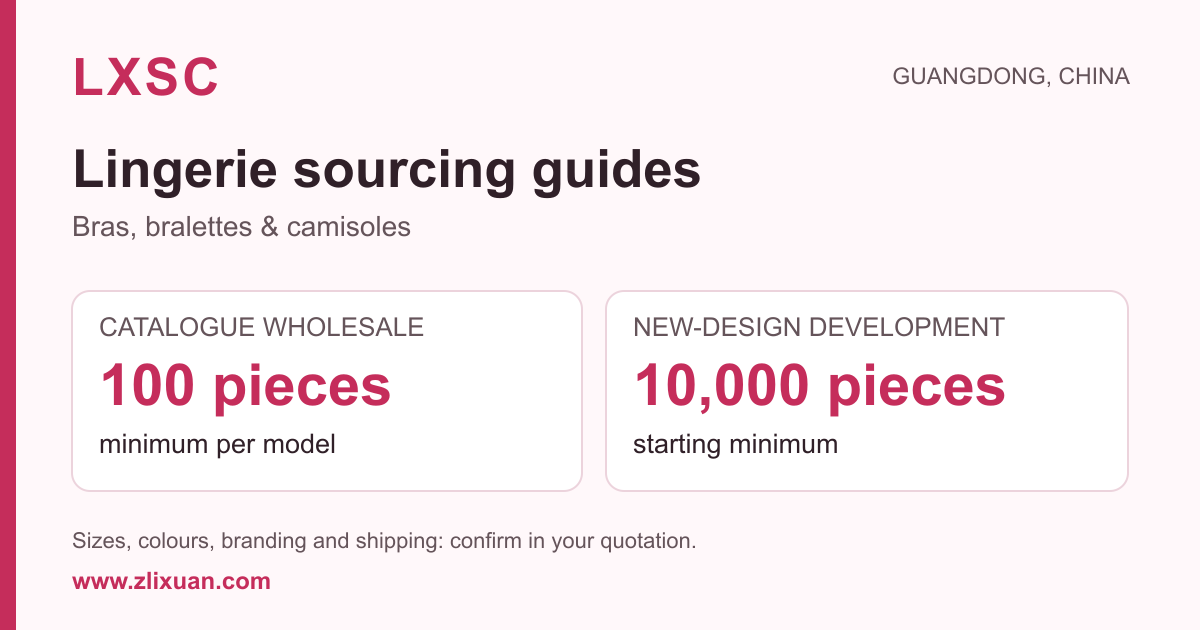
Grosir model yang sudah ada mulai dari 100 potong per model. Produksi khusus desain baru mulai dari 10.000 potong. Pembagian warna dan ukuran serta ketentuan branding dan kemasan dikonfirmasi secara terpisah.
Diskusikan kebutuhan pengadaan AndaArtikel Lainnya
Evaluasi Pemasok Bra untuk Brief Produk Anda yang Tepat
Nilai kecocokan produk dan proses, bukti sampel, tanggung jawab yang disubkontrakkan, serta pengendalian pesanan ulang sebelum memilih pemasok bra.
Daftar Periksa QC Pengiriman Bra: Ukuran, Pengerjaan, dan Kemasan
Gunakan referensi yang disetujui, kriteria inspeksi khusus model, dan keputusan pelepasan tertulis untuk menilai batch sebelum dikirim.
Cara Memverifikasi Pemasok Bra MOQ Rendah untuk Butik Anda
Lembar perbandingan pemasok untuk jumlah minimum, sampel, lingkup pemberian merek, syarat pemesanan ulang, dan penawaran yang sebanding.