
Pembangunan Bra Cawan Diperluas: Perkara untuk Disahkan sebelum Pukal
Oleh LXSC · Panduan penyumberan dan pembangunan produk
Brief cawan diperluas ialah persoalan kejuruteraan dan padanan khusus model. Lilitan lebih besar, label XXL dan cawan liputan penuh tidak membuktikan perkara sama. Panduan ini tidak mendakwa LXSC mempunyai julat D–JJ siap pakai atau peluasan cawan belum diuji tersedia pada minimum pesanan stok.
Tentukan sistem lilitan dan cawan sasaran
Senaraikan setiap gabungan lilitan bawah dada dan cawan diperlukan serta kenal pasti konvensyen saiz jenama anda. Berikan panduan ukuran badan sebenar dan titik ukuran pakaian. Jangan simpulkan kesetaraan cawan daripada huruf sama yang digunakan carta berbeza.
Terangkan sokongan, bentuk, garis leher dan julat pelarasan sasaran. Gunakan ukuran dan sampel rujukan dikenal pasti untuk menerangkan masalah seperti renggang, tekanan atau liputan tidak cukup, daripada meminta cawan lebih besar tanpa takrif.
Asingkan bukti sedia ada daripada pembangunan baharu
Tanya gabungan diminta yang mempunyai pola semasa, sampel fizikal dan semakan padanan didokumenkan. Carta bercetak bukan bukti semua saiznya pernah dibuat atau diluluskan. Rekodkan gabungan tidak tersedia atau belum diuji secara jelas daripada membiarkan saiz terbesar didakwa menyiratkan julat lengkap.
| Gabungan diminta | Bukti diperlukan | Status untuk direkodkan |
|---|---|---|
| Saiz wakil | Rujukan pola dan sampel padanan | Disahkan / semak / belum diuji |
| Sempadan lilitan lebih kecil | Cawan betul, pelarasan dan rekod padanan | Disahkan / semak / belum diuji |
| Sempadan cawan lebih besar | Rekod binaan dan padanan | Disahkan / semak / belum diuji |
| Saiz dirancang lain | Semakan penggredan dan pengesahan dipersetujui | Disahkan / semak / belum diuji |
Semak binaan melalui pemadanan dan pencucian
Dokumenkan panel atau pengacuan cawan, dawai jika ada, tapak cawan, sayap, jalur bawah dada, tali dan pengancing. Tindak balas gabungannya lebih penting daripada satu ciri kelihatan. Tali lebih lebar atau cangkuk tambahan sahaja bukan bukti sokongan.
Gunakan peserta padanan dewasa yang bersetuju serta aktiviti dan tempoh dipersetujui. Rekodkan perubahan padanan, tekanan, pergerakan dan had pelarasan merentasi julat dirancang. Ulang ukuran dan semakan berkaitan selepas prosedur penjagaan dipersetujui; jangan jadikan satu sampel berjaya sebagai kenyataan prestasi seluruh julat.
Luluskan julat terhad dan skop komersial
Bekukan spesifikasi diluluskan, versi sampel dan gabungan disahkan sebelum pukal. Tentukan tindakan dicetuskan perubahan bahan, dawai, cawan atau penggredan: semakan baharu, sampel baharu atau ujian tambahan. Kecualikan saiz belum disahkan daripada dakwaan bahawa seluruh julat sudah sedia.
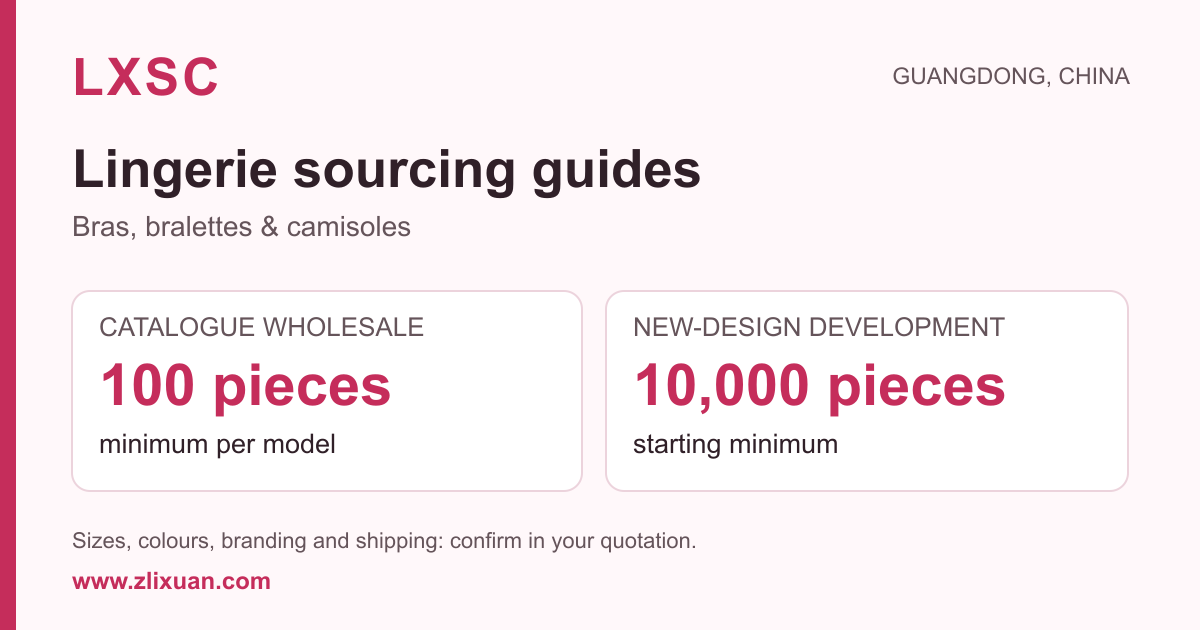
Bagi LXSC, pengeluaran tersuai reka bentuk asli bermula daripada 10,000 helai, tertakluk pada kebolehlaksanaan dan peruntukan disahkan. Pertanyaan ialah permintaan menilai keupayaan, bukan jaminan reka bentuk cawan diperluas diminta boleh dibekalkan.
Soalan Lazim
Adakah XXL membuktikan bra sesuai dengan cawan G atau H?+
Tidak. Label saiz huruf tidak membuktikan padanan lilitan dan cawan tertentu. Minta carta sebenar dan sampel khusus model.
Bolehkah saya memesan reka bentuk cawan diperluas yang serba baharu pada 100 helai?+
Pengeluaran tersuai reka bentuk asli LXSC bermula daripada 10,000 helai dan memerlukan semakan kebolehlaksanaan. Minimum stok tidak boleh digunakan pada reka bentuk baharu belum disahkan.
Hantar model atau keperluan projek, kuantiti, pelan saiz dan warna, serta destinasi anda. Julie boleh mengesahkan pilihan pesanan yang sesuai dan perkara yang termasuk dalam sebut harga.
Borong gaya sedia ada bermula daripada 100 helai bagi setiap model. Pengeluaran tersuai reka bentuk baharu bermula daripada 10,000 helai. Pembahagian warna dan saiz serta syarat penjenamaan dan pembungkusan disahkan secara berasingan.
Bincangkan keperluan penyumberan andaArtikel Lain
Saiz Bra Borong: Ukuran, Label dan Sistem Saiz
Asingkan ukuran badan, ukuran pakaian dan label saiz AS, UK atau EU sebelum meluluskan julat saiz borong.
Kelulusan Sampel Bra: Komen Padanan, Semakan dan Sampel Rujukan
Rekodkan versi sampel bra, komen boleh diukur dan kelulusan akhir supaya spesifikasi betul menjadi rujukan pengeluaran pukal.
Penyumberan Bra Payudara Penuh di Singapura: Rancangan Pengesahan Kesesuaian
Terjemahkan permintaan sebenar butik untuk jalur kecil atau cawan penuh kepada ringkasan sampel berukuran dan berasaskan persetujuan.