Paggawa ng Period Underwear: Espesipikasyon at Pagsusuring Dapat Beripikahin
Mula sa LXSC · Mga gabay sa sourcing at pagbuo ng produkto
Dapat tukuyin sa manufacturing brief ng period underwear ang damit, mungkahing paggamit, at ebidensiyang kailangan sa bawat claim. Hindi mapagpapalit na espesipikasyon ang leakproof, heavy flow, at reusable. Hindi patunay na gumagana ayon sa patalastas ang tapos na absorbent garment ang pangkalahatang fabric certificate o pagkakaroon ng seamless equipment.
Ilarawan ang aktuwal na pagkakagawa ng mga layer
Hilinging tukuyin ng supplier ang sample at itala ang materyal, dimensiyon, at lokasyon ng bawat layer. Isama ang abot sa harap at likod ng gusset, paraan ng pagkakabit, puwesto ng tahi, waistband, at pagkakagawa ng leg opening. Huwag ipagpalagay na pareho ang bilang ng layer o proseso ng pagdurugtong ng lahat ng period underwear.
Itago ang minarkahang sample o drawing kasama ng espesipikasyon. Kung magbago ang layer, barrier, adhesive, o paraan ng pagdurugtong, tukuyin kung aling pagsusuri at claim ang kailangang balikan bago aprubahan ang kapalit.
| Bahagi | Dapat idokumento ng supplier |
|---|---|
| Skin-contact layer | Komposisyon, source, at sample reference |
| Absorbent at barrier layer | Materyal, dimensiyon, at paraan ng pagdurugtong |
| Gilid ng gusset | Drawing ng coverage at pagkakabit |
| Tapos na damit | Modelo, sukat, kulay, at bersiyon |
Gawing maihahambing ang absorbency at washing result
Makipagkasundo sa isang kwalipikadong testing provider tungkol sa paraang angkop sa nilalayong claim. Itala ang test medium, dose, timing, pressure o motion conditions, leakage endpoint, bilang ng sample, at bawat resulta. Hindi dapat palihim na maging rating ng buong range ang pinakamataas na resulta ng isang piraso.
Para sa pahayag tungkol sa paglalaba, tukuyin ang detergent, temperatura, cycle, paraan ng pagpapatuyo, at bilang ng natapos na cycle. Suriin ang parehong performance bago at pagkatapos ng napagkasunduang treatment. Huwag kumuha ng pangkalahatang light, moderate, o heavy na millilitre band mula sa marketing ng ibang brand.
Ihiwalay ang chemical testing sa functional performance
Inilalarawan ng OEKO-TEX ang STANDARD 100 bilang pagsusuri ng textile para sa mapanganib na sangkap at may serbisyo ito sa pag-check ng label. Kailangang tiyakin kung aling aktuwal na produkto o materyal ang saklaw ng sertipiko at ano ang saklaw ng sertipikasyon; hindi ito absorbency o leak-resistance report. Hindi inaangkin ng artikulong ito na may ganoong sertipikasyon ang LXSC o alinmang mungkahing produkto.
Panatilihing magkakasama ang mungkahing wording, kaugnay na ebidensiya, at pinapayagang product scope. Magkaibang usapin ang legal requirements ng destination market at boluntaryong sertipikasyon; kumuha ng angkop na propesyonal na review bago i-print ang label.
Kumpirmahin ang kakayahan bago aprubahan ang development
Hingin ang papel ng pabrika sa bawat operasyon, kaugnay na kasaysayan ng sample, at mga test na kaya nitong ipaayos. Uriin ang proyekto bilang beripikadong kasalukuyang produkto, development na kailangan ng validation, o hindi pa feasible. Hindi maaaring palitan ng pangkalahatang bra inspection checklist ang absorbent-product testing.
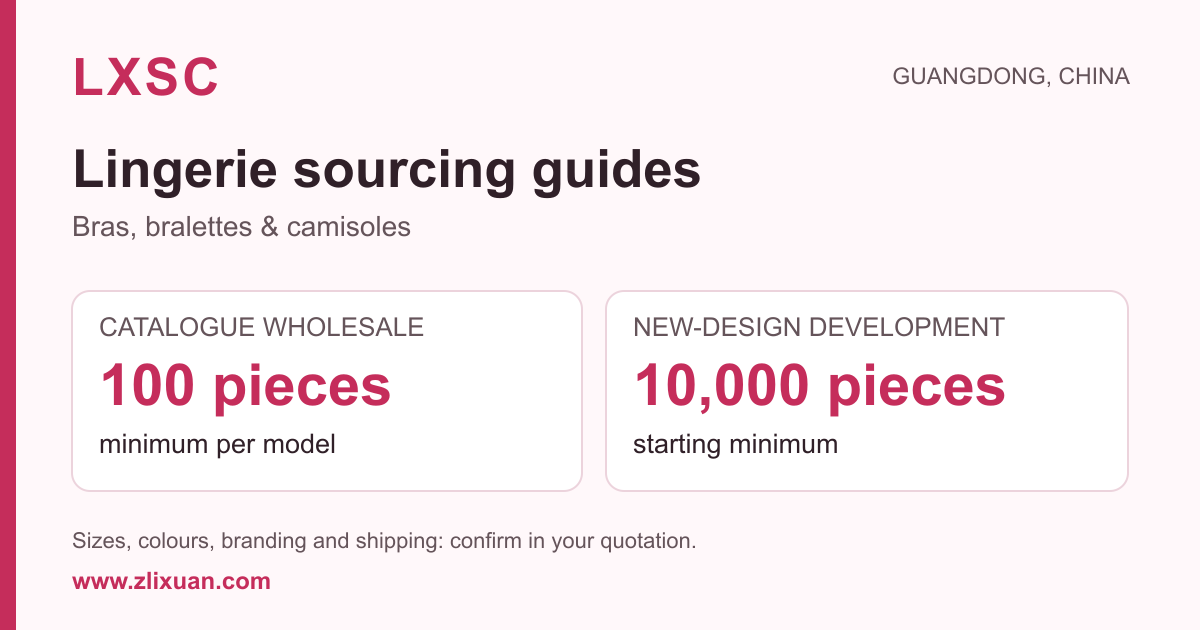
Ang custom production ng orihinal na disenyo sa LXSC ay nagsisimula sa 10,000 piraso, na kailangang kumpirmahin ang project feasibility at quantity allocation. Hindi pinatutunayan ng gabay na ito ang period-underwear availability, test result, o kakayahan sa low-volume custom production.
Mga Madalas Itanong
Pare-pareho ba ang heavy-flow rating?+
Huwag ipagpalagay na maihahambing ang mga ito. Kunin ang depinisyon at test conditions para sa partikular na modelo at mungkahing claim.
Patunay ba ng fabric certificate na leakproof ang tapos na underwear?+
Hindi. Hiwalay na kumpirmahin ang saklaw ng sertipiko at ang functional test report ng modelo.
Mga sanggunian at saklaw
- OEKO-TEX STANDARD 100
Saklaw ng sertipikasyon at pagberipika ng label; sinuri noong 10 September 2026. Hindi ebidensiya ng sertipikasyon ng LXSC.
Maaaring magbago ang gabay mula sa ibang organisasyon. Suriin ang naaangkop na destinasyon, account, produkto, at petsa ng bisa bago magpasya sa pagbili o pagsunod sa mga tuntunin.
Ipadala ang modelo o mga kailangan ng proyekto, dami, plano sa laki at kulay, at destinasyon. Makukumpirma ni Julie ang angkop na paraan ng pag-order at kung ano ang kasama sa quotation.
Ang wholesale ng kasalukuyang mga disenyo ay nagsisimula sa 100 piraso bawat modelo. Ang pasadyang paggawa ng bagong disenyo ay nagsisimula sa 10,000 piraso. Hiwalay na kinukumpirma ang hatian ng kulay at laki, branding, at mga tuntunin sa packaging.
Pag-usapan ang iyong mga kailangan sa sourcingIba Pang Artikulo
Pag-import ng Period Underwear sa Timog-Silangang Asya: Feasibility Checklist
Suriin ang ebidensiya ng produkto, rekisito ng destinasyon, at unit economics bago magkomit sa hanay ng absorbent underwear.
QC Checklist ng Shipment ng Bra: Sukat, Pagkakagawa at Pag-iimpake
Gumamit ng aprubadong sanggunian, pamantayan ng inspeksiyon para sa modelo at nakasulat na desisyon sa release upang suriin ang batch bago ipadala.
Brief ng Custom Bra Sample: Ano ang Ipapadala bago ang Development
Ihanda ang reference, sukat, materyal, at request na may bersiyon upang masuri nang tama ng development team ang proyekto.