กลับไปหน้าข่าว
Market2026-05-30

After De Minimis Ends: Why Cross-Border Sellers Are Shifting From Dropship Parcels to Bulk Wholesale

After De Minimis Ends: Why Cross-Border Sellers Are Shifting From Dropship Parcels to Bulk Wholesale

The de minimis end 2026 wholesale sourcing impact is straightforward: once a country removes the duty-free threshold that let low-value parcels enter tax-free, shipping thousands of individual dropship packages stops being cheap or fast. In 2025 the United States ended the $800 de minimis exemption, and the EU is phasing out its 150 euro customs-duty relief for low-value parcels, so every small package now faces import duty, formal customs data, and brokerage fees. The economics flip in favor of importing in bulk, clearing one consolidated shipment, and fulfilling locally. For lingerie and bra sellers, that means moving from one-by-one parcel arbitrage to wholesale MOQ buying and pallet-level imports.

For nearly a decade, the single-parcel model dominated cross-border fashion. A seller could list a bra, take an order, and have a factory or agent ship that one item directly to the customer under the duty-free threshold. Margins were thin, but high volume and zero import duty made the model work. The end of de minimis breaks that loop: a low-cost bra parcel that now carries duty, a customs entry fee, and slower clearance can lose its entire margin on a single shipment. The structural response is consolidation - putting hundreds or thousands of units into one import, paying duty once on a known landed cost, and storing inventory close to the buyer.

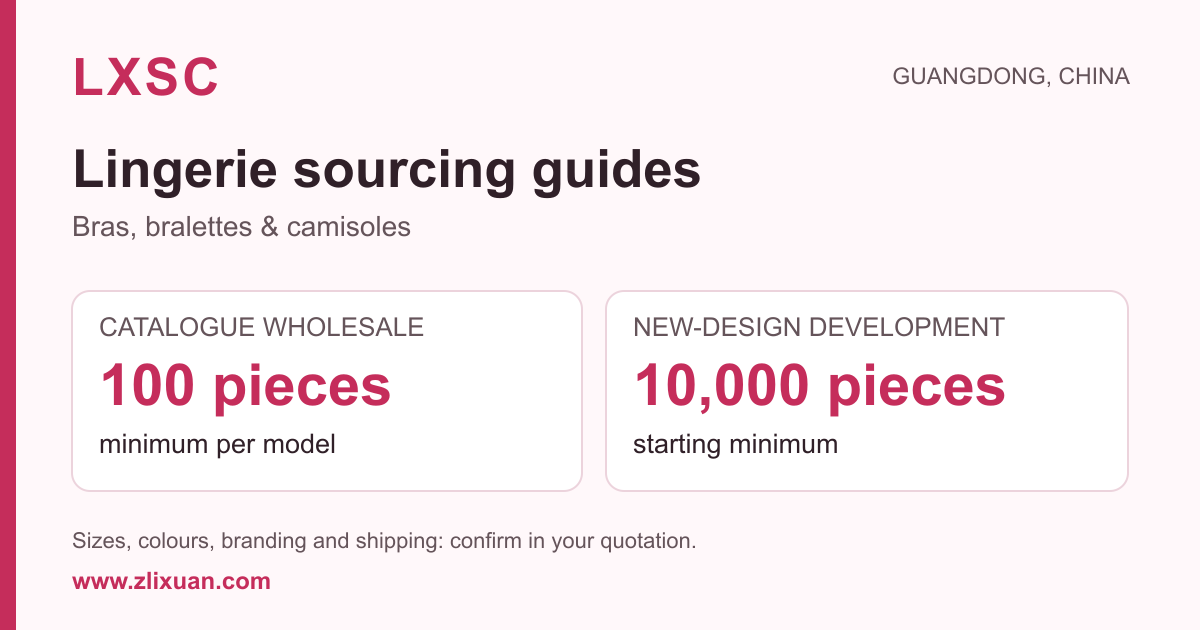
The new playbook has three layers. First, bulk import: buy a meaningful quantity from the factory, ship by sea or air freight on pallets, and clear customs as one commercial shipment so per-unit duty and handling drop sharply. Second, local-warehouse fulfillment: hold that inventory in or near your destination market - a US 3PL, an EU bonded warehouse, or a Southeast Asia hub - so customers still receive 2 to 5 day delivery. Third, wholesale MOQ discipline: order against real sell-through data in batches a factory will actually run, rather than chasing single units. This is exactly the model LXSC is built for, with an MOQ of 100 pieces per style and pallet-ready export packing.

The duty math is the part sellers underestimate. Under the old model, import duty was effectively zero on each small parcel, so landed cost was simply product plus last-mile shipping. After de minimis, you must price in the destination duty rate - apparel and lingerie HS codes often carry meaningful rates, commonly in the high single digits to mid-teens depending on country and fabric content - plus a customs entry or brokerage fee. Spread one entry fee across a bulk shipment of 500 bras instead of paying it on 500 separate parcels, and the per-unit customs overhead collapses from a margin-killer to a rounding error. Bulk import does not avoid duty; it makes duty predictable and dilutes the fixed fees.

Lead time and cash flow change too, and sellers need to plan for both. Dropshipping tied up almost no inventory capital but gave you little control over delivery speed or quality once duties slowed parcels at the border. Bulk wholesale flips this: you commit cash up front and wait for a sea shipment - typically a few weeks in transit - but you gain faster local delivery, consistent QC on a single production run, and real pricing leverage at volume. For a scaling lingerie store, the practical answer is usually a hybrid: keep proven best-sellers in a local warehouse from bulk orders, and reserve air freight or smaller restocks for testing new styles before committing to a full run.

Sourcing-partner selection matters more in this environment because you are now buying production runs, not parcels. The traits that count are a workable MOQ - low enough to test a style, high enough to price well - plus OEM and ODM capability so you can private-label and adjust fabric, cup, or sizing, reliable export packing for pallet freight, and proven experience on the trade lanes you sell into. LXSC produces bras, seamless underwear, camisoles, strapless, plus-size, sports, and teen lingerie and ships across Southeast Asia and worldwide. It fits the consolidated-import model because it can run a private-label batch at MOQ 100 and pack it for freight rather than for thousands of loose parcels.

Incoterms and who handles customs deserve a deliberate decision. Sellers new to bulk import often choose DDP (Delivered Duty Paid), where the supplier or freight forwarder arranges export, freight, import clearance, and duty, then hands you landed goods at your warehouse - removing the customs learning curve. More experienced importers use FOB or EXW and run their own broker to control cost and compliance. Either way, the key shift after de minimis is that customs is no longer something you skip on small parcels; it is a line item you plan, document with accurate HS codes, fabric composition, and declared value, and optimize at the shipment level.

Practically, scaling sellers should move in three steps across 2026. Identify the top 20 to 30 percent of SKUs by sell-through, since those justify holding inventory; place a bulk wholesale order on those proven styles and route them to a local 3PL; and keep a lightweight test channel - small air shipments or sampling - for new designs so you do not over-commit on unproven items. Run a landed-cost spreadsheet per market that includes product cost, freight, duty rate, brokerage, and warehousing, and compare it against your old all-in parcel cost. For most sellers doing real volume, the bulk-import-plus-local-warehouse model comes out cheaper and faster once de minimis is gone - which is precisely why the market is shifting now.

ชุดชั้นในขายส่งและรับผลิต OEM/ODM สั่งขั้นต่ำ 100 ชิ้น ดูสินค้าทั้งหมด · โรงงาน

คำถามที่พบบ่อย

What does the end of de minimis actually mean for cross-border sellers?+

It means low-value parcels that once entered duty-free now face import duty, a formal customs entry, and brokerage fees. Shipping thousands of individual dropship packages becomes slower and more expensive, so consolidating orders into bulk imports cleared as one shipment becomes the cheaper, more reliable model.

Is bulk wholesale really cheaper than dropshipping after de minimis?+

For sellers with real volume, usually yes. Bulk import pays duty once on a consolidated shipment and spreads fixed customs fees across hundreds of units instead of charging them per parcel. The trade-off is upfront inventory cash and a few weeks of freight lead time, offset by lower per-unit cost, faster local delivery, and consistent quality.

What MOQ should a lingerie seller start with when moving to bulk?+

Start with a quantity low enough to test a style but high enough to earn a real wholesale price. A factory MOQ around 100 pieces per style lets you validate sell-through on a private-label run without over-committing capital, then reorder your proven best-sellers in larger batches.

What is DDP and should I use it for wholesale lingerie imports?+

DDP (Delivered Duty Paid) means the supplier or forwarder handles export, freight, import clearance, and duty, delivering landed goods to your warehouse. It is a good choice for sellers new to bulk import because it removes the customs learning curve. Experienced importers often use FOB or EXW with their own broker to control cost and compliance.

How do local warehouses fit into the post-de-minimis model?+

After bulk-importing inventory, you store it in or near your destination market - a US 3PL, an EU warehouse, or a Southeast Asia hub - so customers still receive 2 to 5 day delivery. This combines the duty efficiency of one consolidated import with the fast last-mile that dropshipping used to provide.

ส่งคำสอบถามวันนี้ รับใบเสนอราคาภายใน 24 ชั่วโมง

ติดต่อเราเลย