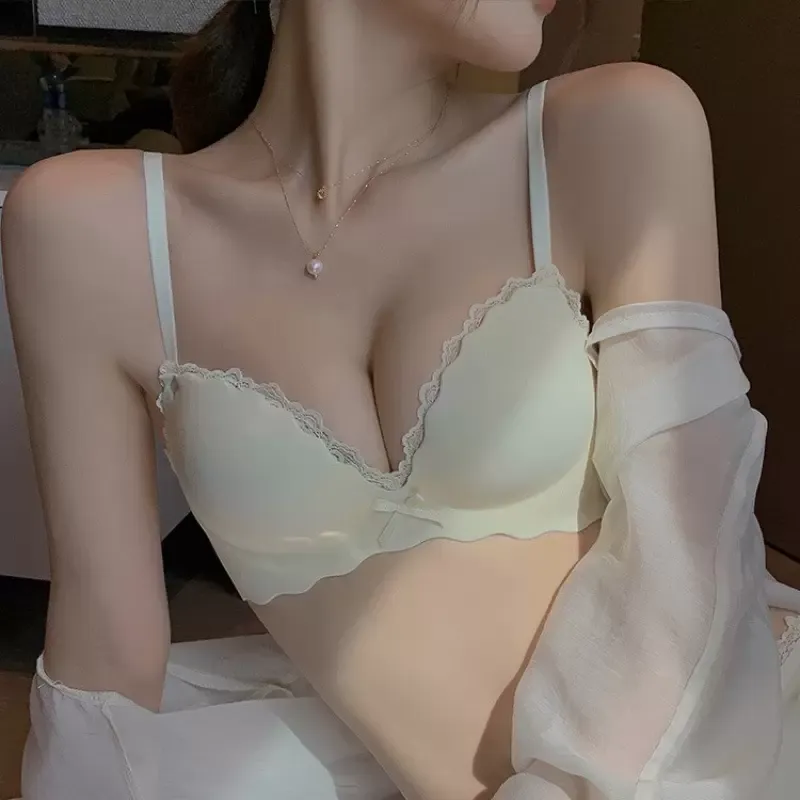
Custom Logo & Branded Packaging for Lingerie: Build a TikTok Shop Brand From a 100-Piece Order

The line between a brand and a dropshipper is about $0.50 a unit. Put a woven label inside the bra, ship it in a printed mailer, and add a logo sticker, and a customer screenshots it for TikTok; ship the same bra in an anonymous gray bag and it gets thrown away unphotographed. The good news for 2026 founders: almost none of this branding requires a big order. The garment runs at MOQ 100 per style, while the consumable pieces (labels, hangtags, mailers) carry their own minimums of roughly 200 to 1,000 that you buy once and draw down across several runs. Factories built for this, like LXSC (Zhulixuan), treat the 100-piece run as the unit of branding, not a barrier to it.
Before spending a dollar, split branding into two layers, because their costs and minimums are completely different. Layer one is on-product: the main woven label at center-back or side seam, the size/care label, a logo on the strap slider or back closure, and an embossed or printed elastic band. Layer two is packaging: the polybag or mailer, an outer box or pouch, tissue, a hangtag, a thank-you card, and stickers. On-product branding makes the bra feel premium in the hand and reads on camera when a creator holds the label to the lens; packaging branding controls the unboxing moment. You do not need all of it on order one, and knowing which layer an idea belongs to is what stops you from over-ordering.
Start with the woven main label, the highest-impact, lowest-risk piece of branding you can add. A woven (damask or satin) label sewn into the center back reads as 'real brand' instantly, survives washing, and costs roughly $0.04 to $0.15 per label depending on size, thread count and fold type, with supplier minimums typically 500 to 1,000 per design. Printed (heat-transfer or screen) labels run cheaper at $0.02 to $0.06 and let you put a long care/size block plus your logo in one tagless application, the soft-touch look most seamless and 'jelly' bras now use. The rule: woven label for the logo customers see and touch, printed tagless label for the legally required fiber content, size and wash symbols. Order the woven label once at 1,000 pieces and it covers ten 100-piece runs.
Your hangtag is the cheapest piece of branding that does the most visual work, and the easiest to get wrong. A standard rectangular tag on 300-350gsm card runs $0.03 to $0.12 at quantities of 500 to 1,000, and add-ons move perceived value fast: spot-UV or foil stamping adds $0.02 to $0.05, a string-and-safety-pin attachment a few cents, and a folded two-panel tag gives you room for a QR code to your TikTok or size guide. For a 100-piece test you can hand-attach hangtags yourself, so you can iterate the design between runs without committing to a huge print quantity. Put one thing on the front (the logo) and one job on the back (a QR code or one-line brand story), never a wall of text.
On-strap and on-hardware branding separates a private label from a relabeled generic, and buyers consistently underestimate how affordable it has become. A logo printed or embossed on the strap slider, a custom-molded ring-and-slider set, or a logo woven into the back elastic typically adds $0.10 to $0.50 per bra, most of which is tooling. Custom hardware (a mold for a branded slider or J-hook) carries a one-time tooling charge, often a few hundred dollars, after which the per-piece adder is small. For a first run, skip custom molds: specify a printed logo on a standard strap slider or a logo on the bra-back gripper elastic and you get the camera-ready 'my brand is on the strap' shot without the tooling deposit. Reserve molded hardware for a proven style you are reordering in the thousands.
Now the packaging layer, starting with the polybag, the single most overlooked branding surface. The default is a clear OPP bag with the printed suffocation warning; for almost no extra cost you can switch to a frosted or matte poly bag with your logo in one color, which photographs far better than shiny clear plastic. Custom-printed poly bags carry a minimum around 500 to 1,000 and add $0.02 to $0.08 each. But if you ship direct-to-consumer (TikTok Shop, Shopify), the better spend is a custom poly mailer, the colored shipping envelope your customer actually receives, printed with your logo and tagline at $0.10 to $0.40 each on 500-piece minimums. A branded mailer turns the doorstep into content; a generic gray bag does not.
If your price point supports it, a rigid box or drawstring pouch is the unboxing centerpiece, but be ruthless about whether your margin can carry it. A simple folding carton with a printed logo runs $0.30 to $1.00 depending on size and finish; a rigid magnetic-lid gift box is $1.50 to $4.00-plus and usually needs 500 to 1,000 units. A non-woven or satin drawstring pouch, popular for seamless and bralette brands because it doubles as travel storage, sits at $0.30 to $0.90 and reads as more sustainable than a box. For a $12 to $20 bra, a printed mailer plus tissue plus a pouch usually beats a heavy rigid box on both margin and on-camera appeal. Save the magnetic box for gift sets or bridal lingerie-set SKUs where the box itself is part of the perceived value.
The cheap finishing touches, tissue, a logo seal sticker, a thank-you card and a small ribbon, are where unboxing videos are actually won, and they cost almost nothing. Printed tissue (one or two colors) runs $0.02 to $0.06 a sheet at 500-plus; a die-cut logo sticker $0.02 to $0.10; a printed thank-you or care card on nice stock $0.03 to $0.10. A high-converting recipe for a sub-$1 packaging budget: branded poly mailer, one sheet of printed tissue folded around the garment, a circular logo sticker sealing it, and a thank-you card with a QR code offering a discount for posting an unboxing. That entire kit lands at $0.40 to $0.80 per order and is the part creators film. Spend here before you spend on a rigid box.
Here is the part most guides skip: the exact artwork files a factory needs, because vague files cause the delays and color mismatches that wreck a first order. Supply a vector logo (.ai, .eps or layered .pdf), never a low-res JPG pulled off your website, so labels and embossing stay crisp at any size. Specify colors as Pantone (PMS) codes, not 'navy blue', because the factory matches thread and ink to Pantone; a hex code is for screens and will drift in physical production. For woven labels, send dimensions, fold type (end-fold, center-fold, straight-cut) and thread colors. For printed packaging, send a print-ready file at 300dpi with 3mm bleed and crop marks, plus a matte-or-gloss note. Getting these right is the difference between approving a pre-production sample in one round versus three.
Always pay for a pre-production sample with your branding applied before the full run, and treat it as the cheapest insurance you will buy. A sample, often one piece or a small set with your actual woven label, hangtag and polybag, lets you check three things photos cannot: that the Pantone match holds in real light, that label placement and stitch quality are clean, and that the packaging physically fits the folded garment. Approving a physical sample is where you catch a logo printed 5mm off-center or a tissue too small to wrap the bra. A factory geared for low-MOQ private label, like an OEM/ODM line such as LXSC's, will expect this step and quote it up front; if a supplier resists sending a branded sample, walk.
Mind the regulatory labels, because branding that removes legally required information gets your listing pulled. Most markets mandate fiber content, country of origin and care instructions on a permanent label, and for poly bags shipped to consumers a suffocation warning is effectively required by Amazon and most marketplaces. The tagless printed label is your friend here: it carries the legal block in small print while your woven label carries the logo, so the product looks clean without breaking compliance. Selling FBA in the US, you will also handle FNSKU labeling, a separate packaging step from brand artwork; decide early whether the factory applies it or your prep center does, because it changes how the polybag is printed and sealed.
Sequence your branding to match your cash and your proof, do not buy everything at once. A sensible first 100-piece order carries the woven brand label and tagless care label on-product, plus a printed poly mailer, a logo sticker and hand-attached hangtags, a branding add of typically well under $1 per unit with most component minimums bought once. When a style proves it sells and you reorder, graduate to custom tissue, a drawstring pouch and a printed thank-you card. When you are reordering in the thousands, that is the moment for molded custom hardware and rigid boxes. This staircase keeps your opening cash in inventory you can actually sell, not in a pallet of branded boxes for a SKU that flopped, the most common way new lingerie brands burn their launch budget.
Run the unit math before you commit, because branding only makes sense if it survives your margin. Take a seamless bra at a $4.50 to $7.00 factory cost. A realistic low-MOQ kit, woven label $0.10, tagless care label $0.03, hangtag $0.06, logo sticker $0.04, printed mailer $0.25, tissue $0.04, adds roughly $0.50 to $0.55 per unit. On a product retailing at $16 to $22, that is about 3% of retail, and it routinely lifts conversion and repeat purchase by more than that through better reviews and unboxing content. The mistake is loading $2.50 of rigid-box packaging onto a $12 bra and watching margin evaporate. Branding should be the smallest line on your cost sheet that does the most for perceived value.
Finally, design for the camera, because on TikTok Shop your packaging is a content asset, not just protection. The unboxing is filmed from a phone held above a bed or table, so contrast and texture beat tiny detail: a bold logo on the mailer, tissue in a color that pops against the product, and a sticker the creator has to peel all read on a 6-inch screen, while a 6-point care paragraph does not. Add one interactive moment, a QR code on the hangtag or card that opens a size quiz or a discount, so the unboxing has a built-in call to action. Standardize the fold so every package looks identical on camera; consistency is what makes a feed of customer unboxings look like a brand instead of a flea market. Get the woven label, the mailer and one sheet of tissue right at 100 pieces, and you have a brand customers will film for free, sourced from a single low-MOQ private-label run.
Wholesale & OEM/ODM lingerie, MOQ 100pcs View All Products · Factory
Frequently Asked Questions
What is the lowest MOQ for custom-branded private label lingerie?+
The garment itself can typically be produced at MOQ 100 pieces per style at factories set up for small private-label runs, such as LXSC. The branding components carry their own separate minimums you buy once and reuse: woven labels around 500-1,000, hangtags 500-1,000, custom poly mailers 500, tissue and stickers 500-plus. So you can launch a fully branded 100-piece order, you just buy a multi-run supply of the cheap consumables on the first go.
Which branding should I add to my very first 100-piece order?+
Prioritize a woven main label with your logo plus a tagless printed care/size label on the product, then a printed poly mailer, a logo seal sticker and hand-attached hangtags for the unboxing. That kit usually adds under $1 per unit, keeps component minimums low, and delivers the camera-ready brand look. Save custom drawstring pouches, printed tissue and molded hardware for your reorder once the style proves it sells.
Woven label or printed (tagless) label, which should I use?+
Use both for different jobs. A woven (damask/satin) brand label at the center back carries your logo, feels premium and survives washing at roughly $0.04-$0.15 each. A printed heat-transfer tagless label carries the legally required fiber content, size and care symbols in a soft, no-scratch application at about $0.02-$0.06. Woven for the logo customers see and touch; printed tagless for the compliance text and a clean, tagless look.
What artwork files does the factory need for custom packaging?+
Send a vector logo (.ai, .eps or layered .pdf), never a low-res JPG, plus Pantone (PMS) color codes rather than hex or color names so thread and ink match physically. For woven labels include dimensions and fold type; for printed packaging supply a 300dpi print-ready file with 3mm bleed and crop marks and specify matte or gloss. Correct files mean you approve the pre-production sample in one round instead of three.
How much does branding add to the cost per bra?+
A realistic low-MOQ kit, woven label, tagless care label, hangtag, sticker, printed mailer and tissue, adds roughly $0.50-$0.55 per unit. On a bra retailing at $16-$22 that is about 3% of retail. The trap is loading $2-$4 of rigid gift box onto a low-price bra; for direct-to-consumer TikTok and Shopify sales a printed mailer plus tissue and a pouch usually beats a heavy box on both margin and on-camera appeal.
Do I still need a suffocation warning and care label if I want a clean branded look?+
Yes. Fiber content, country of origin and care instructions must stay on a permanent label, and a suffocation warning on the poly bag is effectively required by Amazon and most marketplaces. The solution is a tagless printed label that carries the legal block in small print while your woven label carries the logo, so the product looks clean without breaking compliance. If you sell FBA, FNSKU labeling is a separate packaging step to plan with your factory or prep center.
Send us your inquiry today and get a quote within 24 hours.
Contact Us NowMore Articles
Amazon-Ready Bras: Get FNSKU Labels & Poly Bags Pre-Applied at the Factory
How to have your bra factory pre-apply FNSKU labels, poly bags and suffocation warnings so cartons ship straight into Amazon FBA — skipping per-unit prep fees and prep-center delays.
Seamless Bra Manufacturer Sourcing Guide for Wholesale Buyers
How to source a seamless bra manufacturer for wholesale: MOQs, bonded vs molded construction, fabric specs, sampling timelines, and OEM/ODM private-label steps.
Breathable Seamless Private-Label Lingerie for Tropical Climates (2026 Sourcing Guide)
A factory-direct sourcing guide to breathable seamless private-label lingerie for hot, humid markets — fabrics, GSM, construction, MOQ 100 and how to spec a tropical-fit bra.