Back to News
Buying Guide2026-06-08

Full-Bust Wholesale: Where US Boutiques Source DDD–H Cup Bras

Full-Bust Wholesale: Where US Boutiques Source DDD–H Cup Bras

US boutiques source DDD–H cup bras from full-bust specialist labels (Elomi, Goddess, Curvy Kate, Panache), full-bust distributors and trade shows, or directly from OEM/ODM factories that grade real cup blocks past DDD. Mass brands like Victoria's Secret historically stopped near DDD/DD on most styles, so the above-DDD range (DDD, E, F, FF, G, GG, H in UK sizing) is a structural gap a boutique can own. Sourcing factory-direct through an OEM partner at a 100-piece MOQ lets a US boutique build a private-label full-bust range instead of reselling the same five brands every competitor carries.

First, get the sizing language straight, because it is where most full-bust orders go wrong. The US 'DDD' is the same cup as a UK/EU 'E' on most full-bust brands; above it the run continues E, F, FF, G, GG, H, HH, J. A '36G' is not a plus-size band — a woman can wear a 32G or 34G with a slim ribcage and a full cup. That is the core insight US mass retail misses: cup volume and band width are independent, so a full-bust range needs deep cups across narrow AND wide bands, not just bigger bands with modest cups.

Sister sizing is the math that makes a small full-bust order viable. Cup volume stays roughly constant as you move one band size up and one cup letter down: a 34G holds about the same cup as a 36FF and a 32GG. When you plan a size run for a 100-piece MOQ, group sister sizes so you cover the most bodies with the fewest SKUs — for example a tight core of 32-38 bands in F through H rather than spreading thin across 28-44. This keeps each colorway above MOQ while still fitting a real DDD-to-H customer base.

Where US boutiques actually source today falls into four tiers. Tier one is established full-bust brands bought wholesale (Elomi tops out around K cup, Goddess and Curvy Kate run to H/HH) — reliable but every boutique carries them, margins are thin, and there is no brand of your own. Tier two is US full-bust distributors and showrooms that aggregate those same labels. Tier three is trade shows — CURVE New York and the lingerie sections of larger apparel shows — for discovering brands and agents. Tier four, the one with real margin and differentiation, is sourcing directly from an OEM factory that can grade above DDD and produce under your private label.

The reason the above-DDD gap exists on the supply side is grading, not demand. A bra cup does not scale linearly — as the cup deepens from DDD to G to H, the breast root widens and the apex drops, so the cup must gain depth far faster than width. Factories that 'cap at DDD' do so because their cup blocks were drafted for the B–DD bell curve; pushing the same pattern to a G makes seams pull and the apex sit wrong. A genuine full-bust manufacturer keeps separate, fit-tested cup blocks for the larger letters and cross-grades cup against band so a 34G and a 36FF are treated as the close cousins they are.

Construction is what separates a full-bust bra that supports from one that just stretches. Larger cups carry more weight, so the band and frame do the work, not the straps: a three-to-four-hook back, a firm low-stretch band with high recovery, reinforced side wings that stop tissue migrating to the underarm, a three-piece or vertical-seam cup that pushes volume up and in, and taller, heavier-gauge underwires that encase a full breast without springing out of shape. Straps should be wider and fully adjustable, often with a leotard or J-hook back option, to spread load and prevent shoulder grooving. Ask any prospective factory to show you this spec on its largest size, not its sample-size 34C.

Wire-free full coverage in F-to-H cups is the hardest construction to do well and the fastest-growing request from US comfort buyers. Removing the wire means structure has to come from molded or bonded foam cups, a reinforced under-cup sling, a firmer and higher band, and precise seam placement — power-knit cup linings doing the job a wire used to. A wireless G cup that genuinely lifts rather than flattens is a real differentiator; most factories cannot make one, so it is worth sampling specifically before you commit a colorway to it.

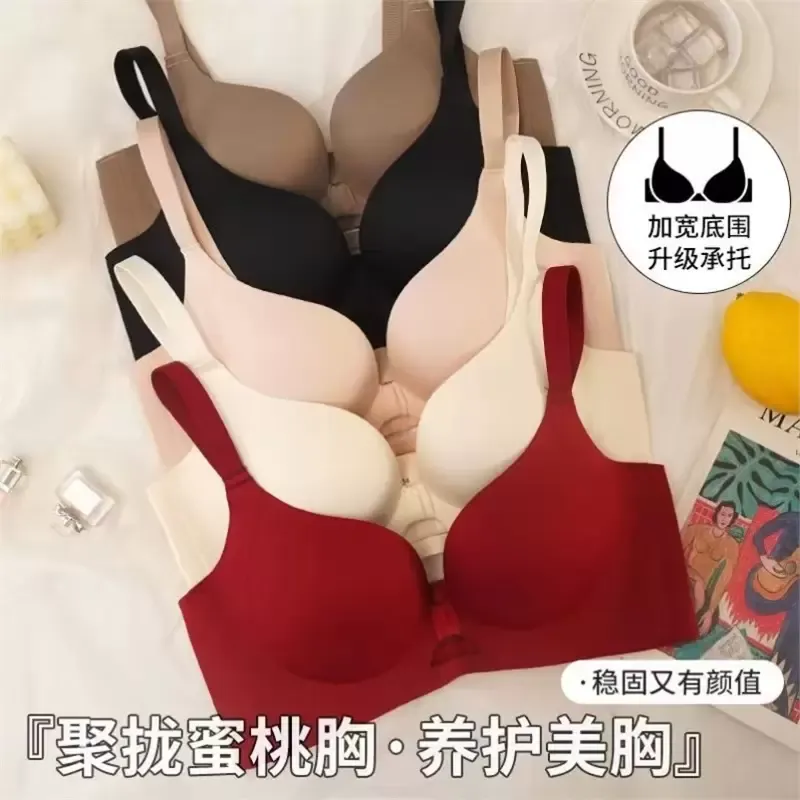
Shade range is a buying differentiator, not an afterthought, especially in the US market. A full-bust line that only ships in one 'nude' loses the customer the moment she filters for her skin tone. Plan at least black, a warm neutral and a cool/deep neutral from launch, and treat a true deep-tone nude as a competitive edge — it is exactly the inclusivity gap full-bust customers complain about most. Confirm your factory can hold consistent dye lots across a multi-shade run, because color drift across reorders is a common quality failure in this category.

On compliance, source honestly. For US retail you do not legally need a certification to sell bras, but reputable export factories should be able to provide OEKO-TEX Standard 100 (or equivalent) test reports on dyes and elastics on request, and care/fiber-content labeling that meets US FTC textile rules (fiber percentages, country of origin, care symbols, RN number if you have one). Do not let a supplier sell you on vague 'international certified' language — ask for the actual test report PDF and the lab name. If a factory cannot produce them, treat it as a flag.

Here is a practical sourcing checklist before you place a full-bust order. Confirm the factory's real cup-block range and request a graded fit sample at BOTH ends — a DDD/E and a G or above — fitted on a real body, not a printed size chart. Ask for the band, wire and strap spec on the largest size. If wire-free is part of the plan, sample that separately. Verify MOQ per style AND per colorway so a wide size run stays viable. Lock fabric, color and support architecture (wired vs wire-free, full-coverage vs balconette) before tooling, because changing it later forces a full re-grade. Place a paid sample order before bulk to validate fit on your actual customers.

LXSC (Foshan Lixuan Xiaozhu Clothing Co., Ltd.) produces OEM/ODM and private-label bras across full-cup, plus-size, seamless and wire-free constructions at an MOQ of 100 pieces per style, with worldwide shipping and strong fulfillment into Southeast Asia and North America. For a US boutique, that MOQ is the lever: it lets you launch a private-label full-bust capsule — say a wireless full-coverage style graded 32–40 in F through H, in three shades — as a trial run, then scale the bands and cups that sell instead of buying a full brand range upfront.

The commercial case is straightforward. Reselling the same full-bust brands every competitor carries means competing on price; building your own above-DDD line means owning a fit your customers cannot get from Victoria's Secret, Target or the next boutique over. Because supply has lagged demand in this range for years, a boutique that grades cleanly to H, nails wire-free support and ships a real shade run captures a loyal, hard-to-serve customer who buys multiples and reorders — exactly the repeat-purchase profile that makes a small private-label run pay back fast. Buyers inquire by model code; send your target size run and support style and request samples to validate fit before bulk.

Wholesale & OEM/ODM lingerie, MOQ 100pcs View All Products · Factory

Frequently Asked Questions

What does DDD convert to in UK/EU full-bust cup sizing?+

On most full-bust brands a US DDD equals a UK/EU E cup. Above it the run continues E, F, FF, G, GG, H, HH, J. US mass-market sizing often stops at DDD, which is why above-DDD shoppers shift to full-bust labels or factory-direct ranges that use UK-style lettering. Always match by actual cup volume, not the letter alone, since brand sizing varies.

Where do US boutiques buy wholesale DDD, G and H cup bras?+

Four sources: established full-bust brands bought wholesale (Elomi, Goddess, Curvy Kate, Panache); US full-bust distributors and showrooms; trade shows such as CURVE New York; and direct from an OEM/ODM factory that grades real cup blocks above DDD for private label. The factory route carries the best margin and lets a boutique build its own range rather than reselling the same brands as everyone else.

Can I order a full-bust range at a low minimum?+

Yes, with the right factory. LXSC produces OEM/ODM and private-label bras at an MOQ of 100 pieces per style. Use sister sizing to group bands and cups so each colorway clears MOQ while still covering a real DDD-to-H customer base — for example a tight 32–40 band run in F through H rather than spreading thin across many bands.

Why do most factories stop at DDD or DD?+

Because of grading. A cup must gain depth far faster than width as it deepens past DDD, and factories whose cup blocks were drafted for the B–DD range cannot simply scale that pattern up — seams pull and the apex sits wrong. A genuine full-bust manufacturer keeps separate, fit-tested cup blocks for the larger letters and cross-grades cup against band so the whole run fits consistently.

Can large cups be made wire-free and still supportive?+

Yes, but it is the hardest construction in the category. A wireless F-to-H cup relies on molded or bonded foam, a reinforced under-cup sling, a firmer high band and precise seaming instead of a wire. Many factories cannot do it well, so sample a worn fit on a real body before committing a colorway, and ask the manufacturer exactly how support is achieved without a wire.

What certifications should a full-bust bra supplier provide for the US market?+

US retail does not require a product certification to sell bras, but a credible export factory should provide OEKO-TEX Standard 100 (or equivalent) test reports on dyes and elastics on request, plus labeling that meets US FTC textile rules — fiber content, country of origin and care instructions. Ask for the actual test-report PDF and lab name rather than accepting vague 'certified' claims.

Send us your inquiry today and get a quote within 24 hours.

Contact Us Now