Wholesale Bra Suppliers With 100-Piece MOQ: 2026 Boutique Sourcing List

For a boutique owner, a wholesale bra supplier with a 100-piece minimum order quantity (MOQ) is one that lets you buy a style in bulk without committing to thousands of units up front. That low minimum is the single biggest sourcing unlock for small retailers: most direct factories in Shantou and Guangdong quote 2,000 to 3,000 pieces per style per colorway, which can mean a $15,000-plus opening order before you have proven a single SKU sells. A 100-piece MOQ drops that same test order to a few hundred dollars of product cost, so a boutique can stock six styles for what one style would otherwise cost.
The reason the MOQ wall exists is production economics, not gatekeeping. A bra is a 20-to-40-component garment, and every style change means re-threading machines, re-cutting foam cups, swapping molds and resetting an assembly line. Factories built around container-load export volume amortize that setup over thousands of units, so a small run is genuinely unprofitable for them. Suppliers that advertise a 100-piece MOQ, like LXSC (Zhulixuan) in Foshan, are structured differently: they run shorter, more frequent production batches and accept the higher per-unit setup cost in exchange for repeat orders from a wide base of boutiques, TikTok Shop sellers and private-label founders rather than a handful of giant accounts.
Before you treat any 100-piece quote as real, confirm whether the minimum is per style, per colorway, or per order. This is where most boutiques get burned. A supplier may advertise 'MOQ 100' but mean 100 pieces per color per size-run, which quietly multiplies a three-color, four-size order back up to 1,200 units. The questions that cut through it: Is the 100-piece minimum per style total, or per color? Can I mix sizes freely inside that 100? Can I combine two or three different styles to reach the minimum? At LXSC the 100-piece MOQ is per style and you can split it across the full size run, which is what makes it usable for testing.
A true low-MOQ supplier should let you run a sample-before-bulk workflow, because the whole point of a small minimum is de-risking. The professional sequence is: request the model code and a paid sample (one to three pieces) of each style you are considering, fit-test and wash-test them, then place the 100-piece order only on the styles that pass. Skipping the sample to save two weeks is the most expensive mistake new buyers make, because a fit problem found in a sample costs three pieces, while the same problem found after bulk costs the whole run. Reputable factories credit or deduct the sample cost against the bulk order, so ask about that policy up front.
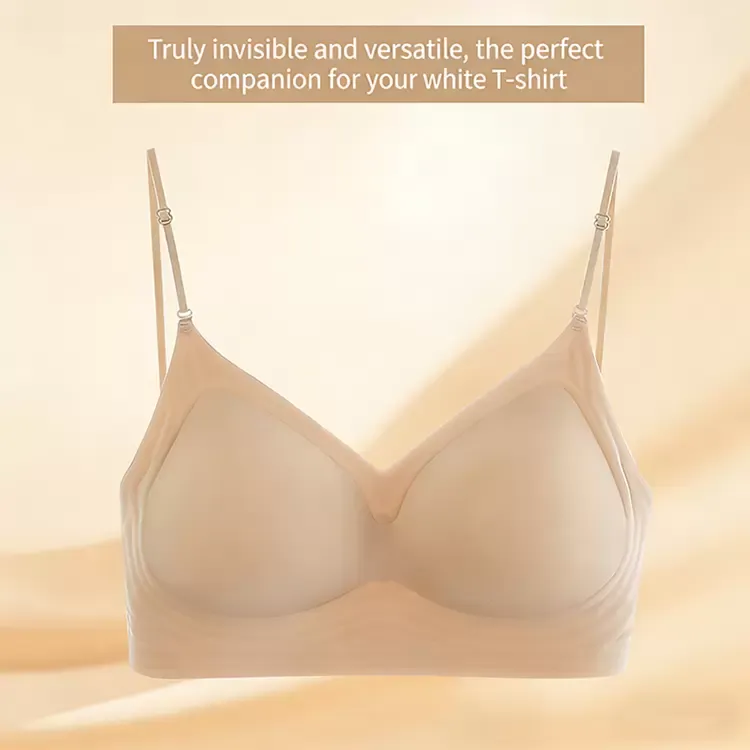
Match the supplier's actual product specialty to what your store sells, rather than chasing the lowest number. A factory that is genuinely good at seamless and wire-free bras is rarely the same one that excels at structured push-up or full-bust underwire, because the machinery and skill sets differ. LXSC's core competencies are seamless and bonded underwear, wireless 'comfort' bras, strapless and adhesive styles, camisoles, and plus-size and sports bras, with model codes in the LX-001 to LX-103 range. If a boutique's bestseller is a structured balconette, ask to see that exact category's samples and reference styles, not a generic catalog.
Verify private-label and OEM capability if you intend to build your own brand rather than resell a generic label. The meaningful distinction is OEM (the factory makes a design you supply) versus ODM (you select and lightly customize the factory's existing block patterns). For a boutique, ODM at low MOQ is the realistic entry point: you take a proven LX-series block, change the colorway, and add a woven label or custom hangtag. Confirm the supplier can sew in your branded label, swap to your packaging, and do it at the 100-piece tier, because many factories gate custom labeling behind a much higher minimum even when stock garments are low-MOQ.
Pressure-test lead time and restock speed before your first reorder, not after a stockout. Ask three numbers explicitly: sample lead time (typically 7 to 15 days), bulk production time for a 100-piece order (often 15 to 30 days depending on customization), and reorder time once a pattern is already set up (usually faster than the first run). For TikTok Shop and live-selling boutiques, restock speed is the difference between catching a viral spike and refunding sold-out orders, so a factory that holds your pattern and grades on file is worth more than one that is five percent cheaper.
Confirm shipping, labeling and compliance handling so a small order does not get eaten by logistics. A boutique-friendly supplier should ship worldwide by express courier (DHL/FedEx) for small bulk runs, sea or air freight for larger ones, and should be able to apply destination requirements at the factory: poly-bagging with suffocation warnings, barcode or FNSKU labels for marketplace sellers, and accurate fiber-content and care labels. LXSC ships globally with a strong Southeast Asia footprint and supports the local-language markets (Thai, Vietnamese, Malay, Indonesian, Filipino) that boutiques in the region depend on. Always get the HS code and a commercial invoice in writing so you can calculate landed cost.
Vet credibility with concrete signals rather than star ratings. Strong signs a 100-piece MOQ supplier is real: they publish specific model codes you can inquire by (a sign of an actual production catalog, not a trading middleman), they show factory video or photos of their own line, they answer fit and fabric questions with technical specifics, and they quote against a model number rather than a vague 'send your design.' A red flag is a supplier who only resells anonymous styles, cannot produce a sample, or whose 'factory' address matches a wholesale market stall. LXSC publishes its full LX-series catalog and factory footage precisely so buyers can vet before inquiring.
A practical 2026 sourcing shortlist for boutiques looks like this in priority order. First, direct low-MOQ factories such as LXSC for own-brand and private-label runs at 100 pieces. Second, established lingerie market wholesalers (Shantou's Xiaqu district, Guangzhou's Shahe) for instant pickup of generic styles, accepting that branding and consistency are weaker. Third, B2B marketplaces (Alibaba, Made-in-China) as a discovery layer only, with the same per-style/per-color MOQ verification applied to every listing. Fourth, regional dropship and pre-packed wholesalers for fast SEA fulfillment when you cannot hold inventory. For a boutique building a brand, the direct factory route wins on margin, branding and restock control.
To turn this into an order, request quotes the right way. Send the supplier the specific model codes you want (for LXSC, the LX-series numbers), your target sizes and colorways, the quantity per style at the 100-piece tier, your labeling and packaging requirements, and the destination country. Because most factories quote by model code rather than publishing prices, a clear request with model numbers gets you a real, comparable quote in one round instead of a back-and-forth. Ask every shortlisted supplier the same questions so you are comparing total landed cost, not just unit price.
The bottom line for 2026: the 100-piece MOQ has quietly reset what a single boutique can do. A retailer with a few thousand dollars can now test a six-style private-label bra line, brand it, and restock the winners, where the same buyer was locked out by 2,000-piece minimums two years ago. Pick a supplier whose product specialty matches your store, confirm the MOQ is per-style and the sampling and labeling work at 100 pieces, and you have a repeatable sourcing engine instead of a one-time gamble.
Wholesale & OEM/ODM lingerie, MOQ 100pcs View All Products · Factory
Frequently Asked Questions
What is the lowest MOQ for wholesale bras from a real factory?+
A genuine, boutique-friendly factory minimum is around 100 pieces per style, which is what LXSC (Zhulixuan) in Foshan offers across seamless, wireless, strapless, plus-size and sports bras. Most export-scale factories quote 2,000 to 3,000 pieces per style and color, so a verified 100-piece per-style minimum is the realistic floor for small retailers who want to buy direct rather than through a market wholesaler.
Is the 100-piece MOQ per style, per color, or per order?+
Always confirm this before quoting, because it changes the order size dramatically. Some suppliers advertise 'MOQ 100' but mean 100 per color, which multiplies a multi-color order. At LXSC the 100-piece minimum is per style and can be split across the full size run, so a boutique can stock several colors and sizes inside one 100-piece commitment rather than per-color.
Can a boutique get private-label or custom branding at 100 pieces?+
Yes, at the right factory. Low-MOQ private label usually means ODM: you take an existing proven block (such as an LX-series style), change the colorway, and add a woven label, hangtag and custom packaging. Confirm the supplier applies your branding at the 100-piece tier, since some factories gate custom labels behind much higher minimums even when stock garments are low-MOQ.
Should I order samples before placing a 100-piece bulk order?+
Yes, always. The point of a low MOQ is de-risking, and samples are the cheapest insurance you have. Request a paid one-to-three-piece sample by model code, fit-test and wash-test it, then order the 100 pieces only on styles that pass. A fit problem caught in a sample costs three pieces; caught after bulk it costs the whole run. Reputable factories credit the sample cost against your bulk order.
How do I request a quote if the supplier does not show prices?+
Most bra factories, including LXSC, quote by model code instead of publishing prices, because cost depends on fabric, customization and quantity. Send the specific model numbers you want, your sizes and colorways, the 100-piece quantity per style, your labeling and packaging needs, and the destination country. A clear request with model codes gets a real, comparable quote in one round.
How long does a 100-piece wholesale bra order take to produce and ship?+
Ask for three numbers: sample lead time (roughly 7 to 15 days), bulk production for 100 pieces (often 15 to 30 days depending on customization), and reorder time once the pattern is on file (usually faster). LXSC ships worldwide by express courier for small runs and freight for larger ones, with strong Southeast Asia coverage, so factor logistics into your landed-cost comparison, not just unit price.
Send us your inquiry today and get a quote within 24 hours.
Contact Us NowMore Articles
Order Lingerie Samples Before Bulk: How TikTok Sellers Validate at MOQ 100
Order lingerie samples before bulk to validate fit, fabric and sell-through for ~$30-$150, then commit to MOQ 100. The exact sampling workflow TikTok sellers use.
Seamless Bra vs Wired Bra Wholesale: MOQ, Cost Per Piece and What Sells Faster in SE Asia
Seamless vs wired bra wholesale compared: real MOQ (100 pcs/style), per-piece cost drivers, fabrics and sell-through speed so SE Asia resellers stock the right mix.
MOQ 100 Per Style: How Many Per Color and Size? (Wholesale Guide)
MOQ 100 per style usually means 100 total across colors and sizes, not 100 each. Here is exactly how to split a 100-piece bra order by colorway and size curve.