MOQ 100 Per Style: How Many Per Color and Size? (Wholesale Guide)

At LXSC the MOQ is 100 pieces per style, and for most stock-fabric styles that 100 is the total across all colors and sizes you choose, not 100 of every variant. A typical first order is one style split into 2 colors and a 5-size run (for example 70/75/80/85/90 in band, or S-M-L-XL-XXL), which lets a growing brand launch a real assortment without buying 500-plus pieces. The split that does carry a sub-minimum is custom-dyed fabric: a non-stock Pantone color is purchased per colorway, so each custom color typically needs roughly 50 pieces of its own to be viable.
The reason the question matters is that 'MOQ 100' alone tells you almost nothing about whether your order is buildable. A buyer who reads it as '100 total' plans a tidy 2-color, 5-size grid; a buyer who reads it as '100 per color' thinks they are locked into 200+ pieces and walks away. Both are guessing because most factory pages publish the headline number and stop. The real constraints sit one level down, at the colorway and size-curve layer, and that is where this guide operates.
Start with the color layer, because it is the harder constraint. If your style uses a fabric we already stock in that shade (black, nude/skin, white, grey are almost always stocked), you can mix colors freely inside the 100 — for instance 50 black, 30 nude, 20 white. If you want a color that is not in stock, the mill dyes a batch specifically for you, and dye lots have their own minimum. As a practical rule, budget about 50 pieces per custom color; below that the per-piece dyeing and setup cost climbs sharply and lead time gets less efficient. So a 100-piece order can be 2 custom colors at 50 each, or 1 custom color plus a stock color, but not 5 custom colors at 20 each.
Now the size layer. Within a single style-color, you spread the quantity across a size curve, and the curve should mirror real sell-through rather than an even split. For a Southeast Asian or general Asian-fit customer base, a workable everyday-bra curve is roughly: S 15%, M 30%, L 30%, XL 18%, XXL 7%. Applied to a 70-piece black run that is about 10 / 21 / 21 / 13 / 5. The mistake to avoid is ordering an even 20% per size — you will sell out of M and L in weeks and sit on XS and XXL for a year.
For band/cup sizing the same logic applies but with more positions. A wired or molded-cup style ordered in 70A through 85C concentrates demand in the 75B / 80B / 75C / 80C cluster; for most Asian-market lines those four positions absorb 55-65% of units, with 70A and 85C as the thin tails. If you are selling into a fuller-bust or Western market, the curve shifts up a band and you add D/DD positions, which is exactly the kind of size-curve adjustment an OEM run lets you specify rather than accept off-the-shelf.
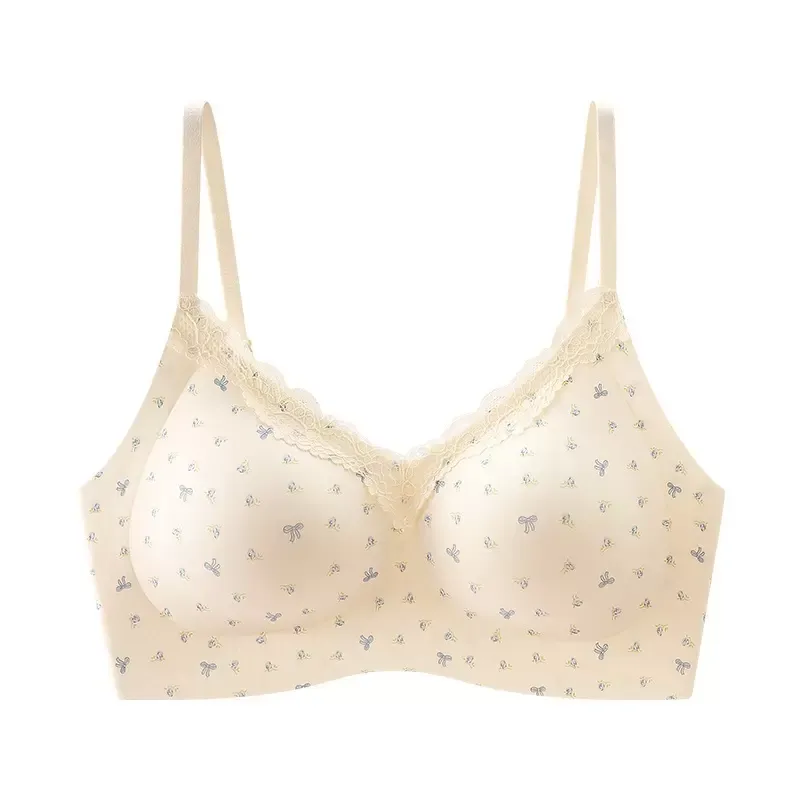
Here is a concrete buildable first order. One seamless wireless style, 2 stock colors (60 black, 40 nude), size run S-XXL using the curve above. That is 100 pieces, hits MOQ, gives you five sizes and two colors to merchandise, and keeps your inventory risk to a single style you can validate before reordering. Total commitment: 100 units, one style, two colorways — not 1,000.
When you genuinely need more colors than 100 pieces can support, the answer is volume, not a workaround. Want 5 colors in a full size run? Plan around 250-300 total pieces (roughly 50-60 per color), which also moves you into better per-unit pricing tiers. The MOQ is a floor for feasibility, not a target — most brands that scale past their first order land at 300-500 pieces per style once they know which colors and sizes actually sell.
Combining styles is the other lever buyers underuse. Each style carries its own 100-piece MOQ because patterns, cutting and setup are style-specific, so you cannot pool 3 styles into one 100-piece order. But you can place 3 styles at 100 each (300 pieces total) in a single shipment, share the freight, and reach a volume price break that no single 100-piece style would unlock on its own. For a boutique or TikTok Shop seller building a small range, three focused styles beats one style stretched across too many colors.
Custom branding interacts with these minimums too. Woven labels, care labels and hangtags are usually ordered in their own minimum quantities (often 500-1,000 units of a label because that is how trim suppliers sell), so a 100-piece garment order can leave you with spare labels — that is normal and cheap, and the spares carry forward to your reorder. Custom polybags and printed boxes work the same way. None of this changes the 100-piece garment floor; it just means your branding budget is sized for the label run, not the first 100 bras.
Lead time scales with how custom your split is. A 100-piece order in stock fabric and stock colors moves fastest because there is no dyeing step; adding custom-dyed colorways adds the mill's dye-and-finish window on top of cut-make-trim. If speed matters for a viral restock, keep the first order to stock colors and save custom Pantones for the reorder, when you already know the style sells.
So the honest answer to 'MOQ 100 per style — how many per color and size?' is: 100 total across stock colors and a sensible size curve, with about 50 pieces as the realistic floor for any custom-dyed color, and 100 per style as a hard floor that does not pool across styles. Plan your size split by expected sell-through, not evenly, and your first 100-piece order becomes a genuine market test instead of a pile of dead XS and XXL stock.
To get an exact buildable split for your specific style, send us the style (or a reference image), your target colors, and the markets you sell into. We will come back with a recommended color allocation and size curve that hits the 100-piece MOQ and matches how that style actually sells — quote the model code in your message and we will confirm what is stock versus custom for that fabric.
Wholesale & OEM/ODM lingerie, MOQ 100pcs View All Products · Factory
Frequently Asked Questions
Does MOQ 100 per style mean 100 of each color?+
No. For stock-fabric styles the 100 pieces is the total across all colors and sizes you choose — for example 50 black, 30 nude, 20 white inside one 100-piece order. The exception is custom-dyed (non-stock) colors, which are dyed per colorway and need roughly 50 pieces each to be viable.
How should I split 100 bras across sizes?+
Follow expected sell-through, not an even split. A workable Asian-fit everyday curve is about S 15%, M 30%, L 30%, XL 18%, XXL 7%, which concentrates stock in M and L where most demand sits. For band/cup sizing, the 75B/80B/75C/80C cluster typically absorbs 55-65% of units in Asian-market lines.
Can I combine several styles to reach the MOQ?+
You cannot pool different styles into a single 100-piece minimum, because patterns and setup are style-specific. But you can order 3 styles at 100 each (300 pieces) in one shipment to share freight and reach a better per-unit price tier than any single 100-piece style would.
What is the minimum per custom color?+
Plan around 50 pieces per custom-dyed color. Below that, the per-piece dyeing and setup cost rises sharply and lead time gets less efficient. Stock colors (black, nude, white, grey) have no such floor and can be mixed freely within your 100 pieces.
How many pieces should I order if I want 5 colors?+
Budget roughly 250-300 total pieces — about 50-60 per color in a full size run. This also moves you into better per-unit pricing tiers. Most brands that scale past their first order settle at 300-500 pieces per style once they know which colors and sizes sell.
Do custom labels and packaging have their own minimums?+
Yes. Woven labels, care labels, hangtags and printed boxes are ordered in their own minimums (often 500-1,000 units), so a 100-piece garment order may leave spare labels. The spares are inexpensive and carry forward to your reorder; they do not change the 100-piece garment floor.
Send us your inquiry today and get a quote within 24 hours.
Contact Us NowMore Articles
Wholesale Bra Suppliers With 100-Piece MOQ: 2026 Boutique Sourcing List
The MOQ wall stops most boutiques from sourcing direct. Here is a 2026 sourcing checklist for wholesale bra suppliers with a 100-piece minimum, plus how to vet them.
Order Lingerie Samples Before Bulk: How TikTok Sellers Validate at MOQ 100
Order lingerie samples before bulk to validate fit, fabric and sell-through for ~$30-$150, then commit to MOQ 100. The exact sampling workflow TikTok sellers use.
Seamless Bra vs Wired Bra Wholesale: MOQ, Cost Per Piece and What Sells Faster in SE Asia
Seamless vs wired bra wholesale compared: real MOQ (100 pcs/style), per-piece cost drivers, fabrics and sell-through speed so SE Asia resellers stock the right mix.