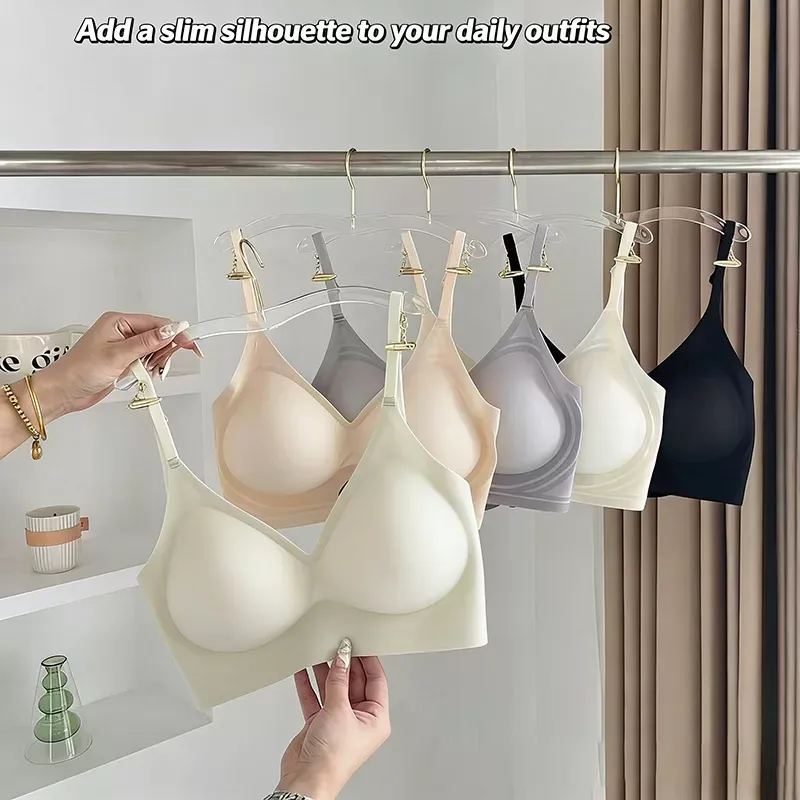
How to Find a Lingerie Factory That Can Restock Fast When Your TikTok Shop Video Goes Viral

When a TikTok Shop video goes viral, you have roughly 48 to 72 hours to ship before the algorithm starts working against you. The right lingerie factory is one that can confirm a reorder within 24 hours and put a fresh batch on a plane in 7 to 12 days, not one that quotes a 45-day production cycle and a 30-day ocean voyage. The single most important question to ask a supplier is not "what is your price" but "if I sell 800 units of one style in two days, how fast can you make and air-freight 1,000 more?" If they cannot answer with a number, they are a catalog wholesaler, not a restock partner. Below is exactly how viral stockouts kill sellers, what fast restock means in production terms, and the concrete questions and lead times that separate a real manufacturing partner from a middleman.
Here is what most new sellers underestimate: a stockout on TikTok Shop is not a pause, it is a demotion. The moment your listing hits zero inventory, TikTok reads it as a zero-conversion signal and stops pushing the video that was driving sales. The platform deprioritizes out-of-stock listings within hours, and even a five-day gap can mean the viral moment has fully passed, with engagement signals going stale and the product effectively re-ranking from scratch — a rebuild that can take three to six weeks of sustained content. You do not just lose the sales you could not fulfill; you lose the distribution itself.
The demand curve is brutally steep. A bra style quietly selling 30 units a day can spike to 800 a day in under six hours when one creator's video catches. If your safety stock is 200 pieces, it is gone before you wake up. Worse, the affiliate creators who made you viral are commission-driven operators watching their earnings per thousand views daily — the instant your link stops converting because you are sold out, they pivot to a competitor's in-stock product and rarely come back. The cost of a stockout is therefore three-layered: the immediate lost revenue, the algorithmic suppression of your best content, and the permanent loss of the creators who were promoting you for free.
This is why "who is your supplier" is a survival question, not a procurement detail. Most lingerie sourcing advice tells you to optimize for the lowest FOB price. For a fast-moving social-commerce business, that is the wrong variable. A factory that is two dollars cheaper per bra but needs 45 days to reproduce a sold-out SKU will cost you far more in lost momentum than you ever saved on unit cost. The metric that matters is reorder lead time: how many days from "please make 1,000 more of style X" to that box landing at your prep center or 3PL.
Define what a genuinely fast restock looks like in real production days, because vague promises are useless. Break the timeline into four stages. First, reorder confirmation — a responsive factory confirms stock, materials, and a production slot within 24 hours, while a slow one takes three to five days just to reply. Second, production — for a repeat order of an existing style where the factory already has your pattern, grading, fabric, and trims on file, a focused run of 500 to 2,000 pieces of seamless or molded bras typically takes 7 to 15 working days, versus the 30 to 45 days a brand-new style requires. Third, freight. Fourth, last-mile prep and inbound to the marketplace.
Freight is where the time-versus-money trade-off becomes concrete, and you should plan for both modes before you ever go viral. At 2026 logistics rates, sea freight from China runs roughly $0.15 to $0.45 per kilogram-equivalent but takes 20 to 28 days door-to-door to the US West Coast and 32 to 40 days to the East Coast. Air freight costs about $3.50 to $5.50 per kg but lands in 5 to 9 days; into Southeast Asian hubs it is faster and cheaper still. Bras are light — a typical seamless bra in a poly bag is well under 150 grams — so air-freighting 1,000 of them might add only a few hundred dollars total, often pennies per unit once spread across the order. That math is the whole game: during a viral window, paying $0.50 extra per bra to arrive in a week instead of five weeks is not a cost, it is the difference between capturing the wave and watching it pass.
So the operating playbook is a hybrid one, and a good factory should help you run it. Ship your baseline inventory by sea to keep landed cost low, and keep a pre-negotiated air-freight reorder lane ready for emergencies. When a video pops, you fire off the reorder, the factory air-freights an emergency batch of 500 to 1,000 pieces to bridge the gap, and the larger sea-freight replenishment follows behind to restore your cheap baseline. The supplier's job is not just to make bras; it is to be reachable, fast to confirm, and willing to split a reorder across two freight modes without treating it as a special favor.
Now the questions that actually surface whether a factory can do this. Ask these in your first conversation, before samples, before prices. (1) "Do you keep my pattern, grading, fabric specs, and trims on file so a repeat order skips development?" — if every reorder restarts from scratch, you will never be fast. (2) "What is your confirmed lead time, in working days, for a repeat order of 1,000 pieces of an existing style?" Push for a number. (3) "Do you stock or pre-reserve my main fabrics and elastics?" Fabric sourcing is the hidden delay — a factory that has to re-buy nylon-spandex jersey for every order adds two weeks. (4) "Can you air-freight a partial reorder and ship the rest by sea?" (5) "What is your real response time on WhatsApp or WeChat during my selling hours?" A factory in a +7 or +8 timezone that replies within hours is worth more than a cheaper one that goes dark for days.
Two more structural questions matter enormously for fast-moving sellers but rarely get asked. First, in-house versus subcontracted production. A factory that cuts and sews bras under its own roof controls its own queue and can slot in an urgent reorder; one that subcontracts to outside workshops is at the mercy of someone else's schedule and will give you soft, slipping dates. Ask directly whether sewing is in-house. Second, the minimum order quantity, because MOQ governs how cheaply you can test and restock. A supplier demanding 2,000 or 3,000 pieces per style forces you to over-commit cash to inventory before you know what will sell — the opposite of what a test-and-scale TikTok strategy needs.
This is where a manufacturer like LXSC (Zhulixuan) fits the restock problem specifically. As a seamless and molded-cup bra factory with a 100-piece MOQ per style and a strong distribution base across Southeast Asia, its workflow is built for exactly this rhythm: validate a style with a small 100-unit run, and when a SKU starts moving, reorder that same style — pattern and fabric already on file — without restarting development. Low MOQ is not just a beginner's perk; it is a restock tool, because it lets you place tight, frequent, style-specific reorders that track real demand instead of guessing months ahead. For sellers in the Philippines, Malaysia, Thailand, Indonesia, and Vietnam, the regional proximity also shortens the air-freight emergency lane considerably versus shipping from a US warehouse.
A worked example makes the hybrid model concrete. Say you sell a wireless seamless bra and a creator's video sends you from 30 to 700 orders a day. Your 250-unit safety stock is gone in well under a day. You message the factory that morning; because they hold your pattern and fabric, they confirm a 1,000-piece reorder the same day and schedule a 10-working-day production run. You split it: 500 pieces by air, landing in about a week and adding perhaps $0.50 per unit, to get back in stock before the algorithm fully cools, and 500 by sea behind it to rebuild cheap baseline stock. Meanwhile you set your listing to display "Out of Stock" rather than deactivating it — critical, because deactivating resets the product ID, reviews, and ranking, while leaving it live preserves them. You also message your top creators a specific back-in-stock date, the single most reliable way to pull them back to a cold listing.
That listing detail is a free lever sellers miss: never delete or deactivate a sold-out listing during a viral moment. Keep it active and showing out-of-stock so you retain the URL, review history, and product ID that carry your hard-won ranking. Pair that with a concrete restock date and, if you can afford it, a temporary commission bump for creators when you come back in stock — a small incentive that reactivates your distribution far more reliably than hoping the algorithm remembers you.
How do you stress-test a supplier before betting a viral moment on them? Run a deliberate small reorder during calm times. Place an initial 100-piece order, then two weeks later place a 200-piece reorder of the same style and time it precisely: how fast did they confirm, did they reuse your specs or ask for everything again, did they hit the quoted date? A factory that handles a planned reorder cleanly will handle an emergency one. A factory that fumbles the easy version will collapse under a real spike. This costs you a few hundred dollars in inventory you will sell anyway — cheap insurance against discovering your supplier is slow at the worst possible moment.
Build your safety stock around your worst realistic spike, not your average day. If a single video can take you to 800 units a day and your air-freight reorder lane lands in 9 days, you need roughly nine days of peak-demand cover — not nine days of average demand — to bridge the gap without going dark. That sounds like a lot of inventory, but with a 100-piece MOQ you can hold modest buffers across several styles rather than a mountain of one, spreading both your cash risk and your bet on which style pops. The goal is never zero stockouts at any cost; it is never being caught flat-footed on a style that is actively trending.
One honest caveat: no factory can make stockouts impossible, and any supplier promising same-week turnaround on brand-new custom styles is overselling. New development — patternmaking, fit samples, grading, sourcing trims — genuinely takes weeks, and you should budget 30 to 45 days for it. The speed advantage only exists on repeat orders of styles the factory already has tooled. That is precisely why your fast-restock strategy must be built before you go viral: develop and approve your core styles in advance, lock the patterns and specs in at the factory, pre-negotiate your air-freight reorder lane, and hold sensible buffers. When the video hits, the only variable left is production-and-ship time — and that is the one a good manufacturing partner can compress for you.
To summarize the sourcing checklist for a restock-capable lingerie factory: confirms reorders within 24 hours; keeps your patterns, grading, and fabric specs on file; quotes repeat-order lead times in working days (target 7 to 15 for existing styles); sews in-house rather than subcontracting; stocks or pre-reserves your core fabrics; offers a low MOQ so you can place tight, frequent reorders; will split a reorder across air and sea freight; and is genuinely reachable during your selling hours in a compatible timezone. Price per unit matters, but for a TikTok Shop business it is the last variable to optimize, not the first. The factory that keeps you in stock through a viral moment is worth far more than the one that is two dollars cheaper and three weeks slower.
Wholesale & OEM/ODM lingerie, MOQ 100pcs View All Products · Factory
Frequently Asked Questions
How fast can a lingerie factory realistically restock a sold-out style?+
For a repeat order of a style the factory already has tooled (pattern, grading, fabric, and trims on file), a focused run of 500 to 2,000 seamless or molded bras typically takes 7 to 15 working days of production. Add air freight of 5 to 9 days to the US, or less into Southeast Asia, and a true emergency restock can land in roughly 7 to 12 days end to end. A brand-new custom style is a different story — budget 30 to 45 days, because patternmaking, sampling, and trim sourcing genuinely take weeks. The speed only exists on repeats, which is why you develop core styles before you go viral.
Is air freight worth it for restocking bras during a viral moment?+
Almost always, yes. Bras are very light — a seamless bra in a poly bag is well under 150 grams — so at 2026 air rates of about $3.50 to $5.50 per kg, air-freighting 1,000 of them adds only a few hundred dollars total, often well under a dollar per unit. Against the cost of staying out of stock for the five-plus weeks sea freight takes — lost sales, algorithmic suppression, and creators defecting to competitors — that premium is trivial. The smart play is hybrid: sea-freight your cheap baseline, air-freight emergency reorders.
What questions should I ask a supplier to confirm they can restock fast?+
Ask: Do you keep my pattern, grading, fabric specs, and trims on file so reorders skip development? What is your confirmed lead time in working days for a 1,000-piece repeat of an existing style? Do you stock or pre-reserve my core fabrics and elastics? Can you split a reorder between air and sea freight? Is sewing done in-house or subcontracted? And what is your real response time on WhatsApp or WeChat during my selling hours? Vague or evasive answers are a red flag that you are talking to a catalog reseller, not a manufacturing partner.
Should I deactivate my TikTok Shop listing when it goes out of stock?+
No — keep it active and let it display as out of stock. Deactivating or deleting the listing resets the product ID, review history, and ranking, forcing you to rebuild from scratch when you restock. Leaving it live preserves the URL, reviews, and product ID that carry your hard-won position. Pair that with a specific back-in-stock date communicated to your top affiliate creators, and consider a temporary commission bump on restock to pull them back to the listing.
How does a low MOQ like 100 pieces help with fast restocking?+
Low MOQ is a restock tool, not just a beginner's perk. A 100-piece minimum per style lets you place tight, frequent, style-specific reorders that track actual demand, instead of committing cash to 2,000 or 3,000 pieces before you know a style will sell. You can hold modest safety buffers across several validated styles rather than one mountain of inventory, spreading both your cash risk and your bet on which SKU pops. That flexibility is exactly what a test-and-scale social-commerce strategy needs. LXSC's 100-piece MOQ is built around this workflow.
How much safety stock should I hold to avoid viral stockouts?+
Size your buffer to your worst realistic spike, not your average day. A single video can take a style from 30 to 800 units a day, so if your air-freight reorder lane lands in about 9 days, you want roughly nine days of peak-demand cover to bridge the gap — not nine days of average demand. With a low MOQ you can hold sensible buffers across several styles rather than over-committing to one. The goal is not zero stockouts at any cost; it is never being caught flat-footed on a style that is actively trending.
Send us your inquiry today and get a quote within 24 hours.
Contact Us NowMore Articles
Amazon-Ready Bras: Get FNSKU Labels & Poly Bags Pre-Applied at the Factory
How to have your bra factory pre-apply FNSKU labels, poly bags and suffocation warnings so cartons ship straight into Amazon FBA — skipping per-unit prep fees and prep-center delays.
Seamless Bra Manufacturer Sourcing Guide for Wholesale Buyers
How to source a seamless bra manufacturer for wholesale: MOQs, bonded vs molded construction, fabric specs, sampling timelines, and OEM/ODM private-label steps.
Breathable Seamless Private-Label Lingerie for Tropical Climates (2026 Sourcing Guide)
A factory-direct sourcing guide to breathable seamless private-label lingerie for hot, humid markets — fabrics, GSM, construction, MOQ 100 and how to spec a tropical-fit bra.