Private Label 'Jelly Bra' Sourcing: Wireless Seamless Push-Up Bras That Sell on Amazon in 2026 (MOQ & Cost)

Here is the realistic 2026 picture for private-labeling the wireless seamless push-up bras buyers call "jelly bras": factory FOB lands roughly $3.50-$8.50 per piece depending on cup construction and gel-pad spec, a flexible factory's MOQ starts around 100 pieces per style, samples run 7-15 days, and bulk production runs 25-40 days. The product is simple: a molded one-piece seamless cup with a soft silicone or PU-gel push-up insert, no underwire, bonded edges that disappear under tight tops. That is the entire pitch, and it is why brands like COCOMARTS, LetsJoli and OEAK turned it into an Amazon best-seller. This article breaks down how to source your own version without copying a brand, what each cost lever does to your unit price, and how to validate a style before committing real money.
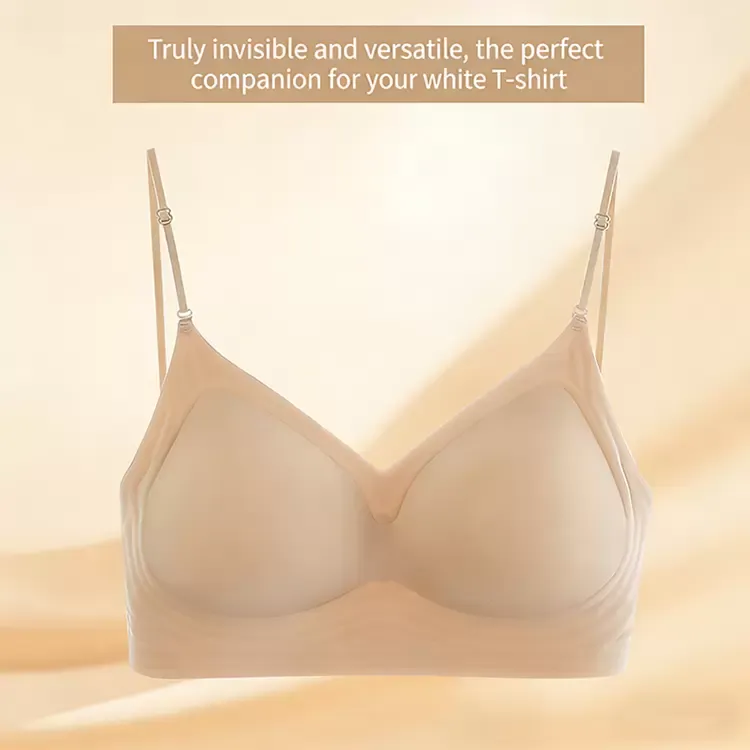
First, be precise about what a "jelly bra" is, because the name causes sourcing mistakes. It is not one product. The term is marketing shorthand covering three constructions that look identical in photos but cost very differently to make. Type one is a molded seamless foam cup with a thin silicone gel pad in a pocket for lift, the most common and cheapest to produce. Type two is a fully bonded one-piece seamless bra with the gel permanently laminated inside the cup, smoothest finish but harder to salvage when QC finds a defect. Type three is the strapless/backless adhesive style with a heavy silicone gel cup, a genuinely different product needing different machinery and carrying a higher reject rate. Naming which of the three you mean is the single biggest thing that stops a factory quoting you the wrong price.
Here is a worked FOB breakdown for the most common Type-one wireless seamless push-up at a Chinese factory in 2026. Seamless nylon/spandex knit cup blank: $0.90-$1.40. Molding and lamination labor: $0.60-$1.00. Silicone gel push-up pads, the "jelly": $0.70-$1.80 per pair depending on thickness and whether it is medical-grade silicone or cheaper PU gel. Bonded straps, hook-and-eye or pull-on band, elastics: $0.50-$0.90. Sewing/bonding labor and trims: $0.60-$1.10. Polybag, hangtag and a woven private-label main label: $0.20-$0.55. Add overhead and margin and you reach a realistic FOB of about $3.50-$5.50 for standard spec, climbing to $7-$8.50 if you specify thick medical-grade silicone, double-layer breathable mesh lining, custom gift packaging and lace trim. These are the actual line items on a costing sheet, not inflated numbers.
The silicone gel insert is the cost lever buyers underestimate. A thin 3-5mm PU-gel pad is cheap and fine for a "light lift" daily bra, but it yellows faster and turns sticky in heat. A 6-10mm medical-grade silicone pad delivers the dramatic push-up that sells on video, holds shape through wash cycles and survives a tropical climate, but it can double pad cost and add $1-$1.50 to the bra. If your market is Southeast Asia, where heat and humidity are daily reality, paying up for proper silicone and a breathable mesh back panel is usually worth it: returns and one-star "it got sticky" reviews kill a listing faster than a slightly higher unit cost.
MOQ is where most first-time private-label buyers get blocked, and it pays to understand why. Large Shantou-cluster factories running dedicated seamless lines often quote 1,000-3,000 pieces per style because their molding tooling and changeover time only pay off on long runs. That is uneconomic for a brand testing a style on TikTok Shop or Amazon. The workable path for a first run is a factory that accepts around 100 pieces per style and will split that across a sensible size and color curve. LXSC (Zhulixuan), for reference, runs OEM/ODM at an MOQ of 100 pieces per style, the band that lets you validate a jelly-bra SKU without sinking thousands into one unproven design. Treat any quote in the thousands as a signal you are talking to a long-run factory, not a launch partner.
Understand the difference between "MOQ per style" and how 100 pieces splits across colors and sizes, because this is where brands accidentally create dead stock. A 100-piece minimum means 100 of one style, not 100 of every color. For a launch, weight one hero color (black or nude/beige) at 60-70% of the run, give a second color the rest, and concentrate units in the three middle sizes that carry the bulk of demand. For an Asian-fit market that core curve is typically the equivalent of S/M/L or 34B-36C; for a US full-bust market it shifts up. Over-ordering rare sizes on a first run is the fastest way to tie up cash, so push your supplier to let you weight the size split rather than forcing an even spread.
Now the part that protects you legally and commercially: do not copy a named brand's exact bra. "I want the COCOMARTS one" is a useful reference for the factory to grasp the construction, but asking it to clone another company's branded product, packaging or marketing copy invites trademark and design problems and yields a product indistinguishable from a hundred other sellers. The smarter brief is functional, not nominal: specify wireless, seamless molded cup, [light/medium/full] silicone push-up, [strap style], [band style], [color], [fabric weight], plus your own woven label and packaging. You occupy the same category as the bestsellers while owning a product that is genuinely yours and defensible as a private label.
Validate before you scale, and treat sampling as cheap insurance. The sequence: send a clear spec and 2-3 reference images, request a pre-production sample (expect 7-15 days and a $30-$80 sample fee that good factories credit back against bulk), wear-test it yourself and ideally on two or three body types, check the gel for stickiness after a hot day and the bonded edges after a wash, then approve. Only after a physical sample passes do you place the 100-piece run. Sellers who skip sampling and order off a photo are the ones who end up with a pallet of bras whose cup runs a size small or whose straps dig in. The sample stage is also where you lock exact silicone thickness, because "push-up" means different things to a factory and to your customer.
Lead times for 2026 planning: samples 7-15 days; bulk production 25-40 days for a 100-500 piece order once the sample is approved; plus shipping. Sea freight to Southeast Asia runs roughly 10-18 days and is cheapest per unit; air freight is 3-7 days and worth it for a reorder when a video goes viral and you cannot afford a six-week stockout. The practical pattern is to ship the launch batch by sea to keep landed cost low, then keep an air-freight reorder option open with the same factory so a sudden spike does not become an outage. Build the calendar backward from these numbers; the most common planning error is assuming a four-week total when sample rounds alone can eat two.
QC on jelly bras has specific failure points that differ from a wired bra, and they belong on your checklist by name. Check gel migration (the pad shifting or bunching in its pocket after flexing), edge-bonding lift (bonded seams peeling at the cup edge), molding asymmetry (one cup deeper than the other, very visible on this style), color consistency between cup and band, and gel odor (cheap PU gel can smell). An AQL 2.5 inspection on these points, by the factory's QC or a third party on larger runs, catches the issues that drive returns. On a 100-piece first run you can inspect a meaningful sample yourself when it lands; on repeat orders, formalize the checklist.
Packaging and labeling are where a private-label jelly bra stops looking like a generic dropship product, and most of it can be done at the factory at low MOQ. A woven main label, a printed care/size label, a branded hangtag and a logo polybag are usually available from around 100 pieces. If you sell on Amazon, you can also have FNSKU labels, suffocation-warning polybags and barcodes applied at the factory so goods arrive FBA-ready. For TikTok Shop, a branded polybag or simple box is what makes the unboxing watchable. Factory-applied branding adds only cents per unit but is the line between a brand and a reseller, and it is far cheaper than relabeling a pallet after it arrives.
On positioning and margin, the jelly bra works on social commerce because it demos itself: the lift is visible on camera in five seconds, exactly what a short-form video or live sell needs. If your FOB is around $4-$5 and your landed cost after freight and (post-2025) import duty lands near $6-$8, a typical retail of $18-$29 on TikTok Shop or Amazon leaves a workable margin even after platform fees and ad spend, provided you are not paying middleman markup on sourcing. The math only holds if you buy direct at factory pricing; every layer of trading-company markup between you and the production line erodes the margin that makes the category attractive.
A note on who to source from. The honest landscape is three tiers: marketplace listings (fast, but you rarely control spec or get true private label), trading companies (convenient, but a markup and a layer between you and QC), and direct factories (best price and spec control, but you manage the relationship). For a launch-stage brand testing jelly bras, a direct factory that genuinely accepts low MOQ and runs in-house seamless production is the sweet spot. LXSC is one such factory-direct OEM/ODM option, with a 100-piece MOQ, a seamless/wireless catalog and worldwide shipping with particular strength in Southeast Asia, which matters if that is your market. The broader point stands regardless of supplier: insist on factory-direct, insist on a sample, insist on owning your label.
Finally, a first-order plan you can act on. Pick one construction type (Type-one molded seamless with a medium silicone push-up is the safest launch choice), write a functional spec instead of naming a brand, request a sample and wear-test it, order 100 pieces weighted 65/35 across two colors and concentrated in your three core sizes, get your woven label and branded polybag applied at the factory, ship the launch batch by sea, and keep an air-freight reorder option ready. That sequence keeps at-risk capital low, gives you a genuinely private product in the category selling right now, and positions you to scale the exact SKUs that prove out rather than guessing at volume before you have data.
Wholesale & OEM/ODM lingerie, MOQ 100pcs View All Products · Factory
Frequently Asked Questions
What is a "jelly bra" and is it the same as a wireless seamless push-up bra?+
"Jelly bra" is marketing shorthand, not one product. It covers three constructions: a molded seamless foam cup with a removable silicone gel pad (most common and cheapest), a fully bonded one-piece bra with the gel laminated in, and the strapless/backless adhesive silicone cup. All are wireless and use a soft silicone or PU-gel push-up insert for lift. When sourcing, name which of the three you want so the factory quotes the right price.
How much does a private-label jelly bra cost from the factory in 2026?+
A standard Type-one wireless seamless push-up lands around $3.50-$5.50 FOB, rising to roughly $7-$8.50 for thick medical-grade silicone, breathable mesh lining, lace trim, or custom gift packaging. The biggest single cost lever is the gel pad: a thin PU-gel pad is cheap, while a 6-10mm medical-grade silicone pad can add $1-$1.50 but survives heat and wash cycles far better.
What is a realistic MOQ for private-label jelly bras?+
Large dedicated seamless factories often quote 1,000-3,000 pieces per style because of tooling and changeover economics, which is impractical for a launch. A launch-friendly factory accepts around 100 pieces per style. For example, LXSC runs OEM/ODM at a 100-piece MOQ, which lets you validate one SKU without sinking thousands into an unproven design. The 100 is typically per style, weighted across a sensible color and size curve rather than split evenly.
Can I just ask a factory to copy the COCOMARTS or LetsJoli jelly bra?+
Use those as construction references so the factory understands the category, but do not ask for an exact clone of a branded product, packaging, or copy. Cloning invites trademark and design problems and produces something indistinguishable from a hundred other sellers. Instead write a functional brief (wireless, seamless molded cup, medium silicone push-up, strap and band style, color, fabric weight) plus your own woven label, so you own a defensible private-label product in the same category.
How do I validate a jelly-bra style before placing a bulk order?+
Send a clear spec and 2-3 reference images, request a pre-production sample (7-15 days, roughly a $30-$80 sample fee that good factories credit against bulk), then wear-test it: check gel stickiness after a hot day, bonded edges after a wash, and cup symmetry. Only place the 100-piece run after a physical sample passes. Skipping sampling and ordering off a photo is the most common way buyers end up with unsellable stock.
What quality issues are specific to jelly bras, and what are the lead times?+
Watch for gel migration (pad bunching), edge-bonding lift, molding asymmetry, cup-to-band color mismatch, and gel odor; an AQL 2.5 check on these points catches most return-causing defects. Lead times for 2026: samples 7-15 days, bulk production 25-40 days for 100-500 pieces after sample approval, plus shipping (sea 10-18 days to Southeast Asia, air 3-7 days for urgent reorders).
Send us your inquiry today and get a quote within 24 hours.
Contact Us NowMore Articles
Amazon-Ready Bras: Get FNSKU Labels & Poly Bags Pre-Applied at the Factory
How to have your bra factory pre-apply FNSKU labels, poly bags and suffocation warnings so cartons ship straight into Amazon FBA — skipping per-unit prep fees and prep-center delays.
Seamless Bra Manufacturer Sourcing Guide for Wholesale Buyers
How to source a seamless bra manufacturer for wholesale: MOQs, bonded vs molded construction, fabric specs, sampling timelines, and OEM/ODM private-label steps.
Breathable Seamless Private-Label Lingerie for Tropical Climates (2026 Sourcing Guide)
A factory-direct sourcing guide to breathable seamless private-label lingerie for hot, humid markets — fabrics, GSM, construction, MOQ 100 and how to spec a tropical-fit bra.