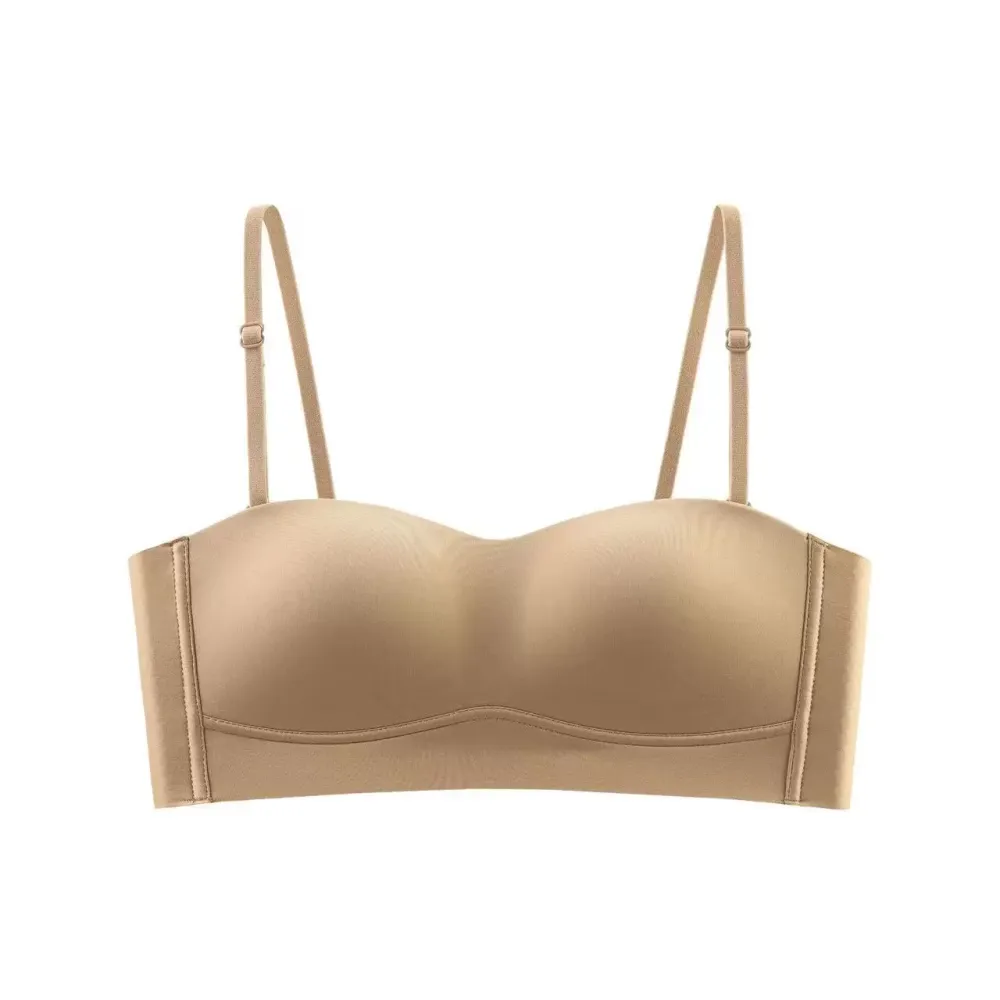
Seamless vs Underwire Nursing Bras: Which Sells Better Wholesale

For most maternity stores, seamless wireless nursing bras outsell underwire nursing bras, and the gap is widening. Seamless styles fit a wider band of changing breast sizes during pregnancy and lactation, carry a far lower fit-related return rate, and convert better as the everyday hero a new mother actually wears around the clock. Underwire nursing bras remain a profitable secondary line for fuller-bust customers who want lift for going out, but they should be the support act, not the lead. The practical rule: build your core nursing assortment around seamless wireless, then add a small underwire range to capture the D-cup-and-up shopper.
The reason comes down to how a nursing customer's body changes. Between the third trimester and the first months of breastfeeding, a single woman can move through three or more band-and-cup combinations as milk comes in, engorgement spikes and supply settles. A rigid underwire is fitted to one shape, so it stops fitting the moment her ribcage or cup volume shifts, and an underwire pressing on filling milk ducts is a genuine clogged-duct and mastitis risk that midwives routinely warn against. A seamless knit cup stretches and recovers with her, which is why it stays in rotation for months instead of being abandoned in a drawer, and why the same shopper comes back to buy a second and third color.
Sell-through is the number that should drive your buy, and seamless wins it on three fronts. First, sizing is simpler: a seamless nursing bra typically sells in stretch bands such as S/M/L/XL rather than 32B through 38DD, so you stock four to six SKUs per style instead of twenty-plus and rarely dead-stock an odd size. Second, the return rate is lower because there is no underwire digging point and no hard cup edge to fit wrong; for many of our buyers fit-related returns on seamless run a few percentage points where graded underwire can hit double digits. Third, the price point invites multi-packs, and nursing customers buy in twos and threes for laundry rotation, lifting your average order value.
Underwire nursing bras are not dead, and writing them off costs you margin. The customer who genuinely needs them is the fuller-bust mother, roughly DD cup and up, who wants real lift and separation for work or an evening out and finds soft seamless cups give her too little shape at the top of the range. For her, a molded underwire nursing bra with a wide cushioned underband and a one-hand drop-away clip is worth a premium, and she is less price-sensitive than the everyday-basics shopper. Stock it as a focused capsule, two to three styles in extended cups, and merchandise it as the going-out option beside the seamless basics rather than competing head-to-head.
Here is a realistic stocking ratio that works for a growing maternity store: roughly 70 percent seamless wireless, 30 percent underwire, weighted further toward seamless if your customer base skews toward A-to-C cups or hot, humid markets where breathability sells. Lead with two or three seamless hero styles in nude, black and a soft tone, in a full stretch-band run. Add one seamless sleep or pump-friendly bralette for overnight and hands-free pumping, which is now a must-stock since most mothers use a wearable or clip-in pump. Then layer the small underwire capsule on top for the fuller-bust shopper.
Whichever way the split lands, certain construction features decide whether a nursing bra sells and re-orders. The clip should be a true one-hand drop-away that a mother can open while holding a baby, not a fiddly two-hand hook. The cup should drop fully to expose the breast for latching or a pump flange without the band losing support. Look for a wide, soft underband for all-day comfort, tag-free or printed labels to avoid skin irritation, and Oeko-Tex Standard 100 certified fabric, which retailers in the EU, US and Southeast Asia increasingly expect on anything worn against postpartum skin. Confirm these on a physical sample before you commit to a bulk order.
Climate and market should also weight your split. In hot, humid Southeast Asian markets a seamless bra knitted from breathable, moisture-wicking yarn outsells a heavier molded underwire bra by a wide margin, because a sweaty underband is the first thing a postpartum customer complains about. In cooler markets and among customers shopping for a return-to-work wardrobe, the underwire capsule earns its shelf space. Read your own returns and exchange notes before locking the ratio, since a store in Manila and a store in Manchester will not buy the same mix.
On cost and minimums, sourcing direct from a factory changes the math versus buying through a wholesaler or local market. A seamless wireless nursing bra is knitted in fewer operations than a cut-and-sewn graded underwire bra, so at factory level it is generally the cheaper unit to produce and the faster to restock, which matters when a style starts selling and you need to reorder before a competitor copies it. At LXSC the MOQ is 100 pieces per style, which lets a maternity store test a seamless hero and an underwire capsule across a sensible color and size spread without tying up cash in a single five-figure order. Because buyers inquire by model code, request a quote against specific codes once you have shortlisted styles.
A simple validation sequence keeps you from over-buying the wrong split. Order samples of two seamless heroes and one underwire style, fit them on staff or willing customers across your real size range, and check the clip, drop-down and underband on each. Place an opening order weighted 70/30 toward seamless, tag each style at point of sale, and watch eight to twelve weeks of sell-through and returns by style. Reorder the winners fast, drop the laggards, and only then expand into a private-label program with your own labels and packaging. This test-then-scale approach is exactly how the maternity buyers we supply move from a 100-piece trial to a repeating seasonal program.
Private label is where the margin compounds once a style proves out. After a seamless hero shows clean sell-through, adding your own woven or printed label, a custom hangtag and branded poly bags turns a generic basic into a brand a new mother recognizes and re-buys, and it is achievable from the same 100-piece minimum rather than requiring a separate high MOQ. Nursing is a repeat-purchase, word-of-mouth category, so a recognizable in-store brand on the bestselling seamless line pays back faster here than in almost any other lingerie segment.
The bottom line for a wholesale buyer in 2026: make seamless wireless your nursing core because it fits a changing body, returns less and re-orders itself, and treat underwire as a deliberate fuller-bust capsule rather than the default. If you want to stock the winning side of this split, request samples and a quote from a seamless and wireless nursing-bra specialist such as LXSC, confirm the one-hand clip, drop-down cup and Oeko-Tex fabric on your target sizes, then place a 100-piece test order to prove sell-through before scaling into private label.
Wholesale & OEM/ODM lingerie, MOQ 100pcs View All Products · Factory
Frequently Asked Questions
Do seamless or underwire nursing bras sell better in a maternity store?+
Seamless wireless nursing bras sell better as the everyday core because they fit a mother's changing band and cup size through pregnancy and breastfeeding, carry lower fit-related returns, and re-order in multi-packs. Underwire nursing bras still sell well as a focused capsule for fuller-bust customers (roughly DD and up) who want lift for going out. A 70 percent seamless, 30 percent underwire split works for most stores.
Why are wireless nursing bras safer for breastfeeding mothers?+
A rigid underwire is fitted to one breast shape, so when milk comes in and the breast swells, the wire can press on filling milk ducts and raise the risk of clogged ducts and mastitis. A seamless knit cup stretches and recovers with the breast, so it stays comfortable and supportive through engorgement and supply changes, which is why midwives often recommend wire-free styles for early postpartum.
How many SKUs do I need to stock seamless versus underwire nursing bras?+
Seamless nursing bras usually sell in stretch bands like S/M/L/XL, so you need only four to six SKUs per style and rarely dead-stock odd sizes. Graded underwire nursing bras need a full 32B-to-38DD style run, often twenty-plus SKUs per style, which ties up more cash and carries higher dead-stock risk. This is a major reason seamless is cheaper to range.
What features should a wholesale nursing bra have before I order?+
Confirm a true one-hand drop-away clip, a cup that drops fully for latching or a pump flange while the band keeps support, a wide soft underband, tag-free or printed labels, and Oeko-Tex Standard 100 certified fabric for postpartum skin. Check all of these on a physical sample before placing a bulk order, since they directly drive sell-through and re-orders.
What is the MOQ for wholesale nursing bras and can I mix styles?+
At LXSC the MOQ is 100 pieces per style, so you can run a test order across two seamless heroes and one underwire style with a sensible color and size spread without a five-figure commitment. Buyers inquire by model code rather than seeing list prices, so shortlist styles, request a quote against those codes, and validate sell-through before scaling into private label.
Is a separate sleep or pumping bra worth stocking alongside nursing bras?+
Yes. Most mothers now use a wearable or clip-in pump, so a seamless, hands-free pump-friendly bralette for overnight and pumping has become a must-stock add-on. It complements the seamless nursing core, lifts average order value as a second purchase, and reaches the hands-free-pumping shopper your underwire range will not serve.
Send us your inquiry today and get a quote within 24 hours.
Contact Us NowMore Articles
Wholesale Bra Suppliers With 100-Piece MOQ: 2026 Boutique Sourcing List
The MOQ wall stops most boutiques from sourcing direct. Here is a 2026 sourcing checklist for wholesale bra suppliers with a 100-piece minimum, plus how to vet them.
Order Lingerie Samples Before Bulk: How TikTok Sellers Validate at MOQ 100
Order lingerie samples before bulk to validate fit, fabric and sell-through for ~$30-$150, then commit to MOQ 100. The exact sampling workflow TikTok sellers use.
Seamless Bra vs Wired Bra Wholesale: MOQ, Cost Per Piece and What Sells Faster in SE Asia
Seamless vs wired bra wholesale compared: real MOQ (100 pcs/style), per-piece cost drivers, fabrics and sell-through speed so SE Asia resellers stock the right mix.