Custom Bra Sample Brief: What to Send Before Development
By LXSC · Sourcing and product-development guides
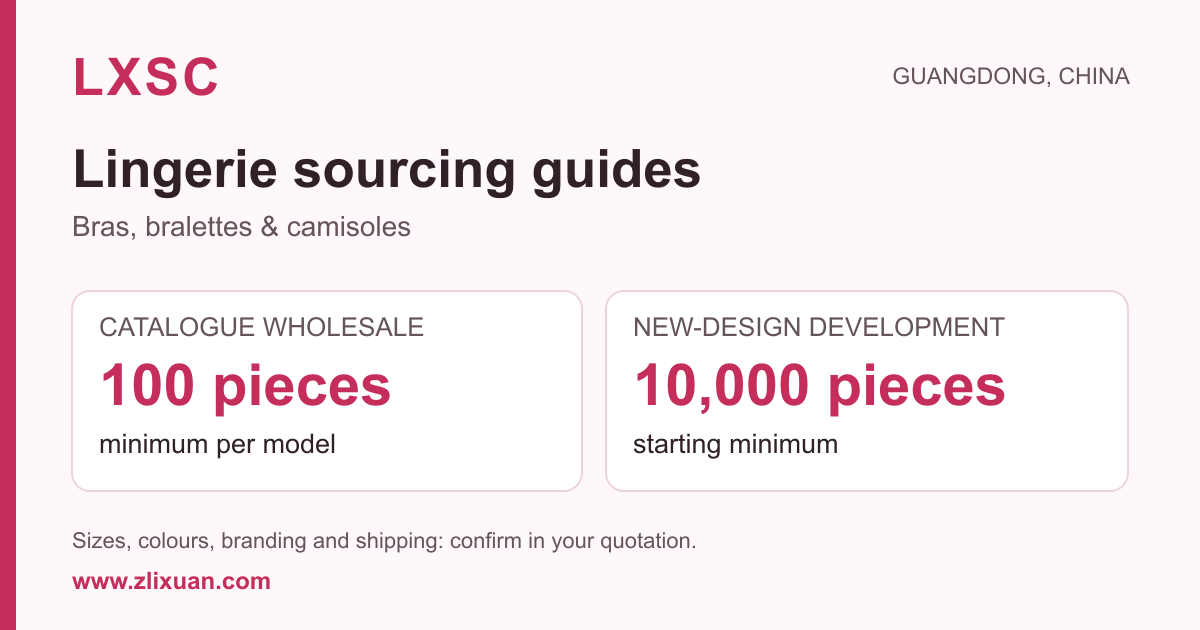
A useful sample brief explains what must be achieved and what remains undecided. For LXSC, original-design custom production starts from 10,000 pieces, subject to project feasibility and confirmed allocation. If you only need an existing model, send the model code first so the request is not mistaken for new development.
Send labelled front, back and detail references
Include clear views of the cup, band, straps, closure and inside construction where available. Label every image with its purpose: overall shape, a particular detail or an example of what to avoid. A photograph cannot reveal exact dimensions, hidden materials or functional performance.
Use original or authorized references and identify any rights restrictions. For a physical sample, record its identifier and agree shipping, return and handling arrangements. Do not assume that supplying a sample grants permission to copy another party's protected design or branding.
Define measurements, units and construction
Name the target sizing system and describe each measuring point. Distinguish body measurements from garment measurements, and relaxed dimensions from any specified stretched measurement. A number without a method is not a usable tolerance.
State wire presence, cup type, padding arrangement, closure, strap adjustment and desired coverage. Mark mandatory features separately from preferences so the team can identify a feasible alternative without silently changing the brief.
| Brief field | Buyer input |
|---|---|
| Project reference | Name ___; version ___; date ___ |
| Size and measuring points | System ___; units ___; marked drawing ___ |
| Construction | Must-have ___; flexible features ___ |
| Material and colour | Composition target ___; physical reference ___ |
| Commercial scope | Quantity ___; destination ___; target cost ___ |
Identify material and branding files
Provide the desired composition, hand feel, colour reference and any performance requirement. If an exact material is not selected, describe the decision that sampling must resolve. Avoid unsupported terms such as medical-grade or guaranteed allergy-free as substitutes for a specification.
Keep logos, label text and packaging artwork in a separately versioned folder. Identify dimensions and placement. Ask which production formats are required and which components need physical approval or independent minimum quantities.
Agree the open questions before making samples
Include destination, intended wear scenario, projected order quantity, target cost basis and required receipt date. Request separate confirmation of development feasibility, sample fees, revision scope and scheduling assumptions; none is settled merely by sending a complete brief.
Create an open-issue list and name the buyer-side approver. The next step is a documented feasibility response and sample plan, not automatic permission to produce bulk. Keep the approved version as the reference for later changes.
Frequently Asked Questions
Can a photograph replace a technical brief?+
No. It can explain appearance, but dimensions, construction, materials, rights and acceptance criteria still need clarification.
Does submitting a brief mean LXSC has accepted the project?+
No. Feasibility, quotation, sample arrangements and the applicable production allocation require confirmation.
Send your model or project requirements, quantities, size and color plan, and destination. Julie can confirm the applicable order route and what the quotation includes.
Existing-style wholesale starts from 100 pieces per model. Original-design custom production starts from 10,000 pieces. Color and size allocation, branding and packaging terms are confirmed separately.
Discuss your sourcing requirementsMore Articles
Can We Develop a Bra from Your Photo or Sample?
Understand what a reference photo can show, when a physical sample is needed and how to prepare a development assessment.
Bra Sampling Approval: Fit Comments, Revisions and Reference Samples
Record bra sample versions, measurable comments and final approval so the correct specification becomes the bulk reference.
Custom Bra Development: From Brief to Approved Bulk Production
Plan a new bra design around feasibility, specifications, sample approvals, size grading and documented production release.