
Lingerie Buying Calendar: Work Backward from Your Selling Date
By LXSC · Sourcing and product-development guides
A buying calendar starts with when stock must be received and ready to sell, not when the factory hopes to dispatch it. Define the destination and actual selling window. Do not apply one spring, summer or festive buying pattern to every market.
Name the market, event and product role
Record the selling start date, end date, destination and channel. Use your own order history or customer requests to distinguish a recurring core product from a limited event candidate. A wedding, holiday or climate assumption is not proof of demand for a particular colour.
For a strapless occasion candidate, confirm the actual fit and structure before buying to a deadline. For a layering or thermal candidate, verify the model's specification and supply status; a catalogue description alone is not evidence of seasonal demand or thermal performance.
Work backward from receipt, not dispatch
Enter route estimates and operational allowances separately. Confirm whether durations use calendar or working days and what event starts each stage. The template below deliberately contains no universal shipping or manufacturing lead time.
| Milestone | Date or duration to confirm | Dependency |
|---|---|---|
| Ready to sell | Target date ___ | Receipt, checking and listing preparation |
| Warehouse receipt | Target date ___ | Transit and destination processing |
| Factory release | Planned date ___ | Accepted inspection and documents |
| Stock allocation or production | Confirmed date ___ | Approved order and available inputs |
| Sample and artwork approval | Required date ___ | Complete brief and review time |
Reserve time for decisions and corrections
Ask about actual factory closures, material availability and booking constraints for your order dates. Keep unresolved sample or artwork revisions visible instead of disguising them inside a single broad lead-time estimate.
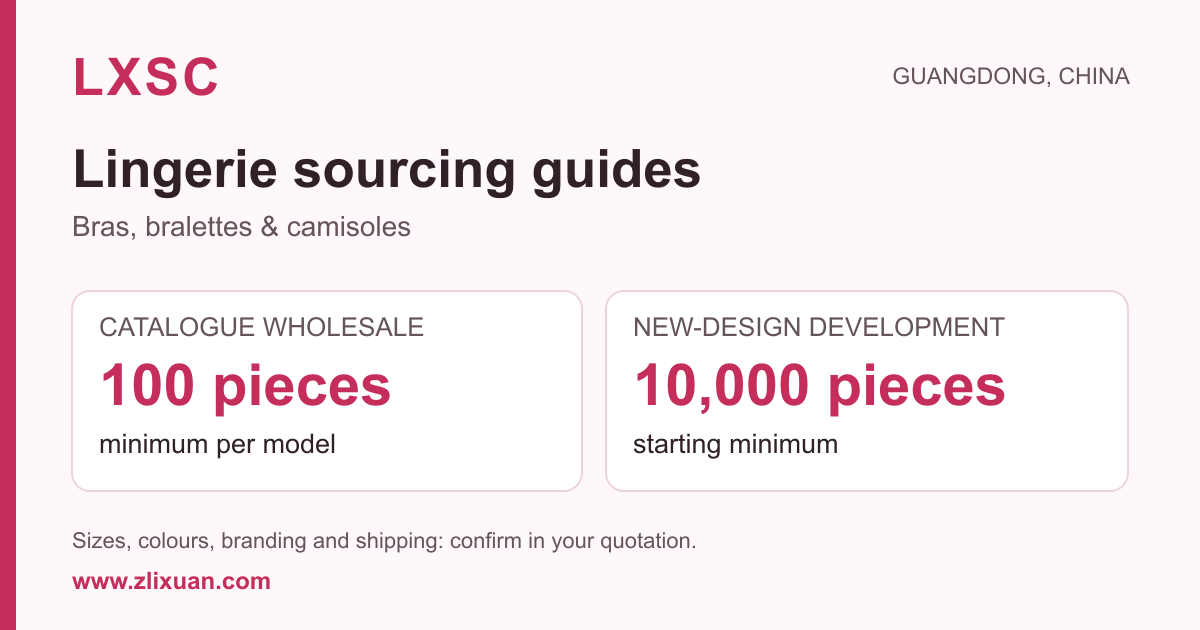
A first design, a branding change and an unchanged stock order have different dependencies. LXSC catalogue styles have a minimum of 100 pieces per model, with allocation and availability confirmed in the quote. Original-design custom production starts from 10,000 pieces and requires feasibility review.
Review the event before repeating the purchase
Record completed sales, remaining variants, markdowns, stockout days and returns for the defined window. Distinguish a late arrival from weak demand and a sold-out size from an unpopular one.
Use the results to revise quantity, timing or the product role for the next comparable event. A calendar should become more specific as evidence accumulates; it should not create a fresh unsupported bestseller forecast every year.
Frequently Asked Questions
Can I use one buying calendar for all countries?+
Use a common template, but confirm the destination, actual event, route and order dependencies separately.
Should I schedule from the factory dispatch date?+
Start with the required ready-to-sell date and work backward through receipt, checks, transport and supplier release.
Send your model or project requirements, quantities, size and color plan, and destination. Julie can confirm the applicable order route and what the quotation includes.
Existing-style wholesale starts from 100 pieces per model. Original-design custom production starts from 10,000 pieces. Color and size allocation, branding and packaging terms are confirmed separately.
Discuss your sourcing requirementsMore Articles
Reduce Bra Order Delays: A Critical-Path Planning Checklist
Identify missing approvals, material dependencies and release checkpoints before agreeing a realistic delivery schedule.
Ship Wholesale Bras to Southeast Asia: Quote and Packing Checklist
Prepare the destination, carton measurements and document requirements needed for a model-specific shipping enquiry.
Choose a Wholesale Bra Assortment for Your Customer and Budget
Use customer needs, sample evidence, order constraints and a clear shortlist to choose your first wholesale bra assortment.