Back to News
Market2026-06-09

Stocking D-to-K Cup Bras in Singapore: The Asian-Fit Gap

Stocking D-to-K Cup Bras in Singapore: The Asian-Fit Gap

Singapore boutiques are leaving money on the rack: most local lingerie labels stop at a B-C cup, yet a real and growing share of customers need D, DD, E, F, G and up to K cups on a comparatively small band (28-36). That mismatch - full cup, narrow ribcage, shorter strap drop - is the "Asian-fit" sizing gap, and the retailers who solve it with the right wholesale supplier capture a high-margin customer who currently has almost nowhere to shop. The fix is sourcing from a factory that grades cups above DDD on petite bands instead of relying on Western-block stock.

The demand is not theoretical. Singapore already supports specialist fuller-bust retailers - Supporting Eve and the local availability of UK label Storm in a D Cup are clear signals that shoppers actively hunt for D-to-K ranges and will pay a premium when they find a true fit. These businesses exist precisely because mass-market and department-store assortments cluster around 34B-36C and abandon the rest of the curve. For a boutique, that abandoned curve is the opening: lower competition, higher loyalty, and far less discounting pressure than the saturated A-C basics segment.

The core technical problem is that a "big cup" is not the same as a "big bra." A woman who wears 30F has roughly the same band as a 30B but four cup volumes more breast tissue. If you stock standard Western-graded bras, the only way to fit her is to size up the band - 34C, 36C - which gapes at the back, rides up, and digs at the straps. Asian-fit grading keeps the band tight (28-36) while scaling the cup independently up to G, H, J, K, so support comes from the band and the cup actually contains the bust. That grading logic is the whole product.

Sizing systems also confuse the buy, and getting them wrong means dead stock. UK and AU cups run A, B, C, D, DD, E, F, FF, G, GG, H, while US cups often jump A, B, C, D, DD/E, DDD/F, G, and EU uses centimetre bands (65, 70, 75, 80) with its own cup ladder. A UK 32G is not a US 32G. When you brief a factory, specify the exact system and provide a measured size chart in centimetres; do not assume letter equivalence. A reliable OEM partner will grade your pattern across whichever system your Singapore customers actually buy.

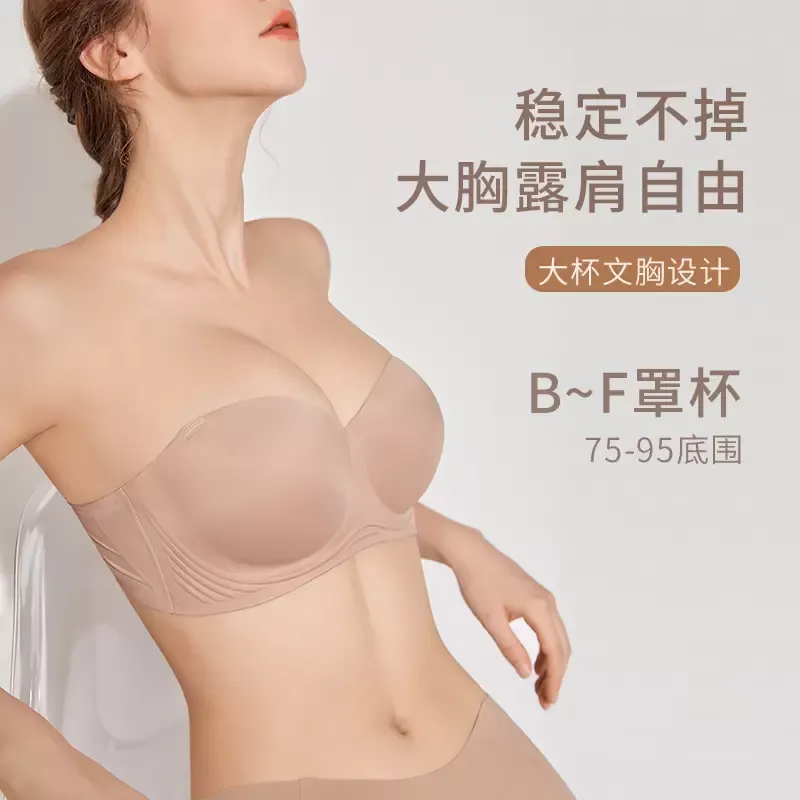
Construction is where cheap full-bust bras fail, so spec it deliberately. Above a D cup, a bra needs a longer, firmer underwire that follows the full root of the breast, a higher and reinforced centre gore to separate and lift, side support panels (often power mesh) to stop spillage at the underarm, three-to-four hook-and-eye columns for band stability, and wider, cushioned, fully adjustable straps with leotard-back or J-hook options to stop slippage on narrow shoulders. Two-part or three-part cups give shape and projection that a single moulded foam cup cannot at these volumes.

For the Singapore climate, material choice decides sell-through. The fuller-bust customer wears her bra all day in heat and humidity, so breathability and moisture management matter more than decoration. Spec a nylon/spandex foundation with power-mesh wings, cotton-lined or moisture-wicking cradles, and seam construction that does not chafe under a full cup. Cooling and lightweight knits sell year-round here; heavy padded push-up styles in synthetic foam do not. Comfort-first full-cup styles in neutral skin tones, black and white form the year-round core, with lace and colour as seasonal accents.

On the commercial side, this is a depth play, not a breadth play. Do not try to launch every cup in every band on day one. Start with a tight curve in the sizes that actually move - in many Singapore boutiques that is roughly 32-36 bands in D through G - and order deep on those, keeping 28-30 bands and H-K cups as a controlled test. A 100-piece MOQ per style makes this affordable: you can validate a full-bust style across a focused size run for the same outlay as a single saturated basic, then reorder fast on what sells through.

Why source factory-direct instead of importing finished UK or US full-bust brands? Three reasons. First, margin - branded full-bust bras carry heavy distributor and licensing markups, while a factory-direct OEM run lets you set your own retail price. Second, fit localisation - imported Western brands are graded for a different frame, so you inherit the band-too-loose, strap-too-long problem; an OEM factory grades to your Asian-fit chart. Third, branding - private-label means custom woven labels, hangtags and packaging from a 100-piece order, so the range is yours, not a reseller's.

LXSC's manufacturing scope fits this niche directly: full-coverage and full-cup construction, plus-size and full-bust grading, wireless and wired support, seamless and moulded options, and OEM/ODM private label at a 100-piece MOQ per style. The practical workflow is to send a reference photo or a physical sample of a bra that fits your customer well, provide your target size chart in centimetres, confirm fabric and cup structure, approve one or two sample rounds, then place a focused bulk order. That removes the guesswork that kills first full-bust orders.

A realistic launch plan for a Singapore boutique looks like this: pick two to three full-cup styles (one everyday t-shirt bra, one soft/wireless option, one balconette or lace style for evening), grade each across a focused D-to-G run on 32-36 bands, order MOQ 100 per style in skin, black and white first, and run samples on real fit models before bulk. Use the sample stage to lock underwire length, gore height and strap drop - the three details that determine whether a full-bust customer becomes a repeat buyer.

Measure success by reorder rate, not first-order sell-out. The fuller-bust customer is famously loyal because she struggles to find anything that fits; once a boutique nails her size, she rebuys the same style in multiple colours and tells her network. That is why staying in stock on the proven bands and cups matters more than constantly adding new styles. Partner with a factory that can restock the same grading consistently - inconsistent cup volume between production runs is the fastest way to lose a hard-won full-bust following.

The opportunity, in short: Singapore has visible, under-served demand for D-to-K cups on Asian-fit bands; the technical solution is independent cup grading plus full-bust construction, not bigger bands; and the commercial route is factory-direct OEM at a 100-piece MOQ that lets a boutique own the range and the margin. Boutiques that move first on this gap build a defensible, high-loyalty category before the mass market catches up. To start, request a catalogue and quote by model code, send a well-fitting reference sample, and brief your exact size chart.

Wholesale & OEM/ODM lingerie, MOQ 100pcs View All Products · Factory

Frequently Asked Questions

What is the "Asian fit" sizing gap in fuller-bust bras?+

It is the mismatch between a full cup and a small, narrow ribcage. Many Asian-frame customers need a D, E, F, G or larger cup on a 28-36 band with a shorter strap drop. Standard Western-graded bras force them to size up the band to reach the cup, which gapes and slips. Asian-fit grading keeps the band tight and scales the cup independently, so the band gives support and the cup actually contains the bust.

Why don't Singapore boutiques already stock D-to-K cup bras?+

Most mass-market and department-store assortments cluster around 32-36 bands in B-C cups because that is the fastest-moving, lowest-risk part of the curve. Grading above DDD requires different patterns, longer underwires and reinforced construction, so generalist suppliers skip it. That leaves the D-to-K range under-served - which is exactly why specialist demand (e.g. shoppers seeking Supporting Eve or Storm in a D Cup) is so loyal and so profitable for boutiques that fill it.

What's the minimum order to launch a full-bust range?+

With a 100-piece MOQ per style, a boutique can launch a focused full-bust capsule affordably. A practical start is two or three full-cup styles, each graded across a tight size run (for example D-G on 32-36 bands) in skin, black and white. That validates the category for roughly the cost of a single saturated basic style, after which you reorder on the sizes and colours that sell through fastest.

How do I make sure the cup grading matches my customers?+

Specify the sizing system you sell in (UK/AU, US or EU) and provide a measured size chart in centimetres - never assume letter equivalence, since a UK 32G is not a US 32G. Send a physical sample of a bra that already fits your customer well. A factory like LXSC then grades the pattern to your chart and runs one or two fit samples on real models before bulk, locking underwire length, gore height and strap drop.

Should I import Western full-bust brands or source OEM from a factory?+

Factory-direct OEM usually wins on three fronts. Imported Western brands carry distributor and licensing markups that compress your margin, are graded for a different frame so the band runs loose and straps run long, and remain someone else's brand. An OEM run lets you set retail pricing, grade to an Asian-fit chart, and add your own woven labels, hangtags and packaging from a 100-piece order.

What construction details matter most above a D cup?+

Support has to come from engineering, not luck. Prioritise a longer, firmer underwire, a higher reinforced centre gore, power-mesh side support panels to prevent underarm spillage, three-to-four hook-and-eye columns for band stability, and wide, cushioned, fully adjustable straps with J-hook or leotard-back options for narrow shoulders. Two- or three-part cups give the projection and shape that a single moulded foam cup cannot at large volumes.

Send us your inquiry today and get a quote within 24 hours.

Contact Us Now