Define Your First Bra Brand: Customer, Range and Product Brief
By LXSC · Sourcing and product-development guides
Before planning manufacturing, decide who the first range serves and which buying problem it addresses. A brand promise should be narrow enough to test with samples and customer feedback. Adding a logo does not by itself establish a unique fit, better quality or profitable demand.
Define one customer and wear scenario
Describe the intended shopper, channel, clothing context and price position. Use observations and customer questions where possible. Separate facts already observed from assumptions still needing testing; avoid defining a whole country or age group by one preferred colour or body shape.
State one primary need such as adjustable coverage, a particular silhouette or a smoother appearance under a named garment. Do not turn a comfort preference into an unsupported health or performance guarantee.
Give each launch style a distinct job
A small range can contain a core option, a contrasting fit or silhouette and an occasion-specific candidate. Those are planning roles, not a prescribed number of products or a guaranteed profitable mix. Each additional model adds an inventory decision and may introduce another size or packing requirement.
| Range role | Decision to record |
|---|---|
| Core candidate | Customer need and reason for repeat consideration |
| Alternative candidate | Different fit, coverage or appearance requirement |
| Occasion candidate | Specific use and selling window |
| Exclude for now | Unverified demand, fit or supply constraint |
Match every promise to evidence
For each proposed product statement, list the supporting specification, photograph, sample observation or test report. A brand can describe verified adjustable straps or cup construction without claiming universal comfort, medical benefit or a sales record it does not have.
Keep visual identity and garment performance separate. A consistent label and image style may make the range easier to recognize, but your actual fit guidance, product condition and customer service must carry the promise after purchase.
Turn the brand brief into a route decision
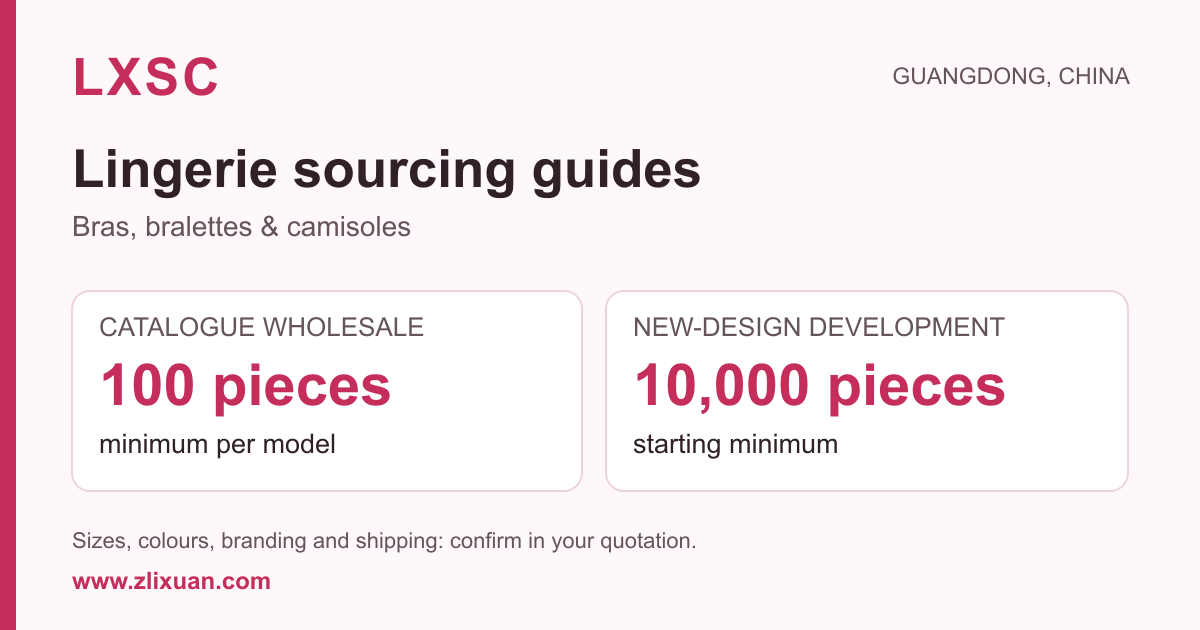
If a confirmed catalogue model meets the requirement, ask about its availability and any requested branding. LXSC existing catalogue styles have a minimum of 100 pieces per model; colour and size allocation is confirmed in the quote. Label, material and colour changes require a separate review.
If the brief requires an original garment design, LXSC custom production starts from 10,000 pieces, subject to feasibility and allocation. Do not begin with development spending merely because the brand is new. Choose the route that matches the actual product change.
Frequently Asked Questions
Does a new brand always need a new garment design?+
No. A suitable existing model may be considered first, with any branding scope separately confirmed.
How many launch styles should I choose?+
Choose only those with distinct customer roles and an affordable, confirmed allocation. This guide does not prescribe a universal number.
Send your model or project requirements, quantities, size and color plan, and destination. Julie can confirm the applicable order route and what the quotation includes.
Existing-style wholesale starts from 100 pieces per model. Original-design custom production starts from 10,000 pieces. Color and size allocation, branding and packaging terms are confirmed separately.
Discuss your sourcing requirementsMore Articles
Private-Label Lingerie: Choose a Launch Route Before You Order
Separate catalogue selection, branding changes and original design, then approve the right sample, budget and shipping plan.
Choose a Wholesale Bra Assortment for Your Customer and Budget
Use customer needs, sample evidence, order constraints and a clear shortlist to choose your first wholesale bra assortment.
Lingerie Packaging Options: A Quote and Sample Checklist
Compare neutral packing, labels, hangtags and boxes by actual scope, dimensions, quantity and approval status.