Private-Label Lingerie: Choose a Launch Route Before You Order
By LXSC · Sourcing and product-development guides
Private label can describe different levels of change. Selecting a catalogue garment, adding branding and developing an original design are not one interchangeable low-MOQ service. Choose the route first so the quantity, sample plan and quotation match the work requested.
Separate stock selection, branding and original design
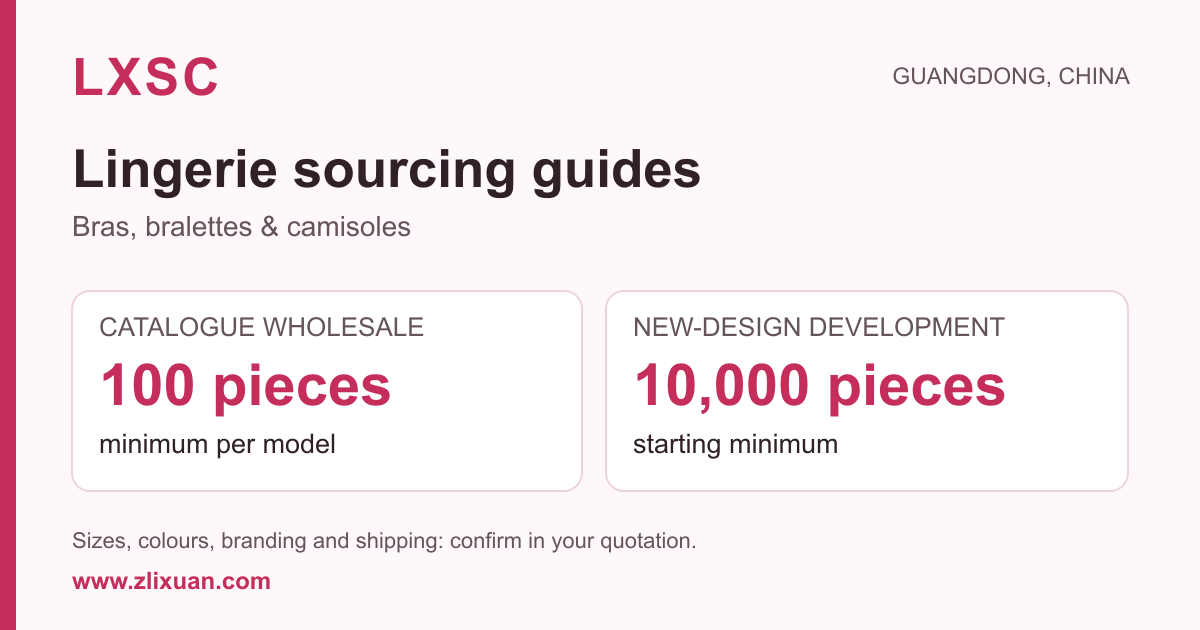
For LXSC existing catalogue styles, the minimum is 100 pieces per model. Confirm size and colour allocation and availability in the quote. Adding labels or packaging, changing materials or developing a colour requires its own scope review; it is not automatically included in that minimum.
Original-design custom production starts from 10,000 pieces, subject to feasibility and confirmed allocation. A photo, new neckline, cup change or new pattern should be assessed as a product change rather than casually described as adding a logo.
| Route | First approval |
|---|---|
| Existing catalogue model | Model, available variants and quantity |
| Branding or other change | Exact change, feasibility, component terms and quote |
| Original design | Development brief, feasibility and production minimum |
Plan the range and cash commitment
Give each candidate a customer role and obtain the actual allocation rules. Do not calculate a multi-colour launch by assuming an unconfirmed per-colour minimum or unrestricted mixing. Include samples, setup, goods, branding, transport and destination charges as separately identified items.
Keep a contingency distinct from the agreed quality standard. A reserve for returns or unexpected costs is not permission for a supplier to ship a stated percentage of defective goods. Confirm nonconformance handling in the commercial agreement.
Approve products and branding before bulk
For the garment, approve the identified sample, measuring points, size coverage and construction. For branding, approve the file version, wording, placement and physical output where needed. One approval does not substitute for the other.
Record changes and outstanding questions in a single versioned specification. A material or cup change can require renewed fit checks. Keep an approved reference and define the shipment inspection plan instead of assuming sampling removes all bulk risk.
Prepare shipment and learn from the first batch
Confirm the delivery point, responsible parties, packing, documents and applicable destination requirements. Agree when each stage starts: material readiness, production, release, transit and receipt. The overall launch date must allow for unresolved approvals rather than rely on a generic factory lead time.
After receipt, reconcile the allocation and record completed sales, stockouts, returns and customer fit questions by variant. Decide which models to repeat, revise or stop using that evidence. No fixed sell-through, launch duration or profit is promised by this workflow.
Frequently Asked Questions
Can my own new design be produced at 100 pieces?+
LXSC original-design custom production starts from 10,000 pieces, subject to feasibility. The 100-piece minimum is per existing catalogue model, not a blanket new-design offer.
Is a contingency the same as an acceptable defect allowance?+
No. Budget uncertainty and the agreed product acceptance standard are separate matters.
Send your model or project requirements, quantities, size and color plan, and destination. Julie can confirm the applicable order route and what the quotation includes.
Existing-style wholesale starts from 100 pieces per model. Original-design custom production starts from 10,000 pieces. Color and size allocation, branding and packaging terms are confirmed separately.
Discuss your sourcing requirementsMore Articles
Define Your First Bra Brand: Customer, Range and Product Brief
Give each launch style a clear customer and role before choosing stock branding or original development.
Lingerie Packaging Options: A Quote and Sample Checklist
Compare neutral packing, labels, hangtags and boxes by actual scope, dimensions, quantity and approval status.
Custom Bra Sample Brief: What to Send Before Development
Prepare references, measurements, materials and a versioned request so a development team can assess the project accurately.